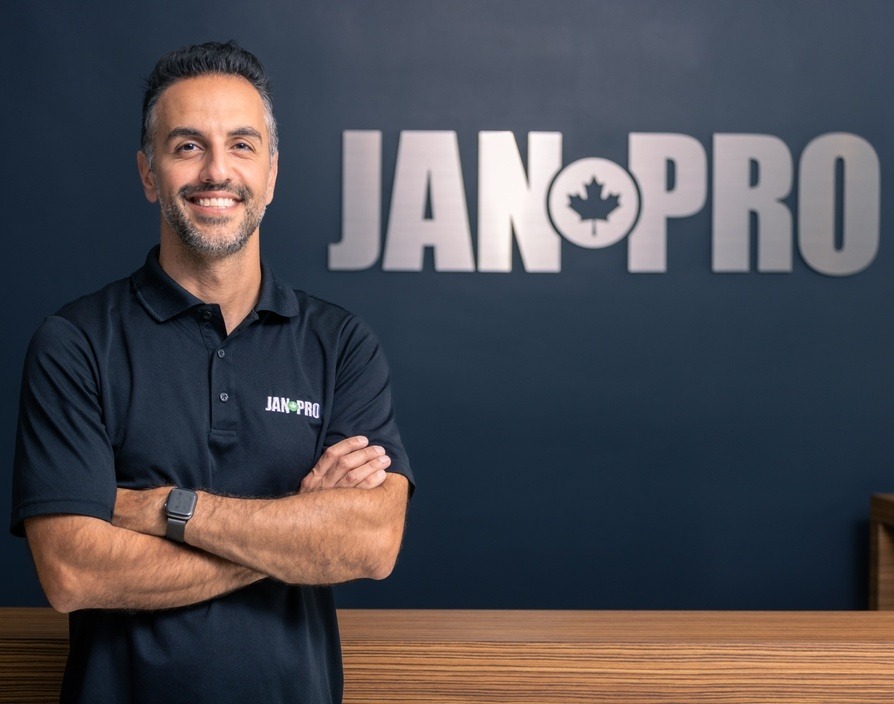
After almost 15 years in the business, Essi Yeganegi, President of commercial cleaning company, JAN-PRO Vancouver, and VP of Marketing, JAN-PRO Canada, has developed a clear philosophy of how to make a franchise network successful.
Like many, he believes the franchise model works best when every part of the relationship is mutually beneficial, from the customer receiving consistent service, to the franchise owner building a sustainable business through working closely with franchisees.
“After almost 15 years in this business, one thing has become abundantly clear to me – a franchisee’s success is the franchisor’s success,” Yeganegi says.
“When you have franchisees that feel supported with proper systems and process in place to help build the brand, the end customer is going to experience a higher service level through consistency and dealing with happy and engaged business owners.”
Striking the correct balance between structure and ownership is central to franchising. Systems and processes provide the framework, but the people inside that framework determine whether a business can thrive.
“It may sound obvious,” says Yeganegi, “but franchisees are not commodities. You have to find the right people, who have enthusiasm and energy, and are willing to do what it takes to not just maintain JAN-PRO but advance it forward.”
The ideal franchise relationship creates what he describes as a “win-win-win” outcome.
“I’ve always viewed it as a win-win-win – where the customer, the franchisees, and the franchisor all benefit from a solid foundation,” he says.
Consistency creates customer loyalty
JAN-PRO Vancouver has established an impressive customer retention rate of more than 96%, which Yeganegi attributes to the company’s straightforward approach towards three key aspects of the business.
“We’ve helped guide our franchisees to follow a simple framework of Communication, Standards, and Service,” he says.
In commercial cleaning, trust is essential. Franchise owners and their teams often have access to customer workplaces outside normal operating hours, making reliability and communication critical parts of the relationship.
“When a customer trusts a franchisee with the keys to their facility, we want to build a foundation of trust and maintaining a relationship with key stakeholders,” Yeganegi says.
The company establishes trust through consistent engagement, and developing an understanding of customer expectations.
“Does the customer know who comes into their building? If there’s an after-hours emergency, would the customer expect to receive a phone call from the cleaning team that arrives and finds something out of place? And simply, wouldn’t the customer appreciate periodic check-ins to ensure they’re satisfied?” Yeganegi says.
Alongside communication, maintaining standards is a key part of protecting a franchise brand. Yeganegi compares the challenge to other franchise sectors where customers expect an identical experience wherever they see the logo.
“In food franchising, customers expect the same output each and every time. Your hamburger from a franchise chain should taste and look the same each and every time, from each and every location,” he says.
Commercial cleaning presents a similar challenge, where consistency directly affects customer confidence.
“In commercial cleaning, consistency is of utmost importance, and our standards are what help achieve this,” Yeganegi says.
Finding franchise owners with the right mindset
While strong systems certainly help franchisees succeed, the right owner profile remains perhaps the most important factor.
The attraction of franchising sometimes stems from the desire for an easier route into business ownership, without understanding that building any sort of business still requires a huge amount of work, and franchising is no different in that respect.
Yeganegi believes successful franchise owners need commitment, ambition, and a willingness to be involved.
“I’ve been doing this long enough to quickly tell if someone is in this just for the money or for long-term success,” he says.
“Franchising is a long game and the ones who have an idea of what their business could look like years from now are the ones who will take the necessary steps to build a strong foundation to then hire and train more staff and take their business to the next level.
“I am cautious about the ones who want to run their business as a passive investment. A franchisee is an owner-operator, and the key is never to forget that you’re an operator,” Yeganegi says.
The wrong approach can create challenges across the entire franchise ecosystem.
“If you expect to sit on your couch and cheques be mailed to you without training and managing your teams, nor communicating with and understanding the needs of your clients, you will simply waste your time and money,” he says.
“It’s better to find one invested franchisee fully aligned with mutual goals rather than 10 that will simply pay a franchise fee and who don’t really care about your brand and system,” he adds. “That would lead to a ‘lose-lose-lose’ situation, where everyone, particularly the customer, will be let down.”
Training franchisees to become business owners
JAN-PRO’s approach to franchise support begins with a focus on business ownership rather than simply teaching operational tasks.
“JAN-PRO’s Certification program is designed not to train cleaners, but to train business owners,” Yeganegi says.
“We want to ensure that franchisees understand that they’re not buying a cleaning job. They’re investing in an opportunity to have a successful business.”
Support continues beyond onboarding and initial training through development courses and practical guidance.
“Beyond the initial certification, we hold ongoing trainings and workshops to further develop skills, obtain certifications (i.e. scissor lift for high reach cleaning), and our local Brand Standards team work closely and regularly with franchise owners to deliver 1:1 training, on-site,” he says.
Responding to changing customer expectations
Like many businesses, JAN-PRO’s operations were changed by the pandemic, which altered expectations around workplace cleanliness and disinfection, but also created an opportunity out of it.
“At that time, customers quickly realized that the need for cleaner workplaces with advanced disinfection was of utmost importance,” Yeganegi says.
The challenge was turning increased demand into a sustainable service offering. The firm responded by developing a cleaning package that incorporated regular EnviroShield disinfection, their proprietary 360-degree disinfection system, rather than limiting the service to emergency situations.
“We needed to provide a better option than only coming in after a confirmed case of COVID-19 was reported,” Yeganegi says.
Delivering that service required investment in franchisee training and capability.
“We then trained about 40% of our franchise owners to become Certified EnviroShield Technicians, to ensure that customers were getting a service by technicians who understood the technology, how it works, chemical formulation, and can safely and effectively deliver the service,” he explains.
Building a brand while supporting local markets
Marketing has also become an increasingly important part of JAN-PRO’s growth strategy. While direct sales remain central, Yeganegi says the pandemic also highlighted the importance of brand awareness.
“JAN-PRO has always been heavily invested in sales, as we’ve found that direct conversations with decision makers are the best way to get into an organization to show our value,” he says.
But the business also recognized that potential customers needed awareness before they were ready to buy.
“Most people aren’t thinking about their favourite commercial cleaning company, in fact they can barely even name one,” Yeganegi says.
That led to a greater focus on brand recognition and visibility for future customer needs.
“We understand that 99%+ of the public is not our target market right now. Maybe not tomorrow either. But five years from now, someone may be tasked with having to source cleaners or call someone to disinfect their workplace, and we want to do that by staying top-of-mind,” he says.
Technology, community and the future of franchising
Technology is another area of investment to support franchise growth. Yeganegi says innovation has always been central to the company’s approach, from cleaning methods to digital tools, and the company is continually exploring how emerging technologies can improve efficiency and decision-making.
“We believe AI will play a transformative role in the future of commercial cleaning, and we are committed to ensuring that our franchisees remain at the forefront of these technological advancements,” Yeganegi says.
But while technology can improve processes, he believes people remain the defining feature of the franchise model.
“Anyone can whip up a system, a process, a workflow (especially now in the age of AI) but when you have the backing of a team that’s fully invested in your franchise’s success, I don’t think any technology could ever replace that,” he says.
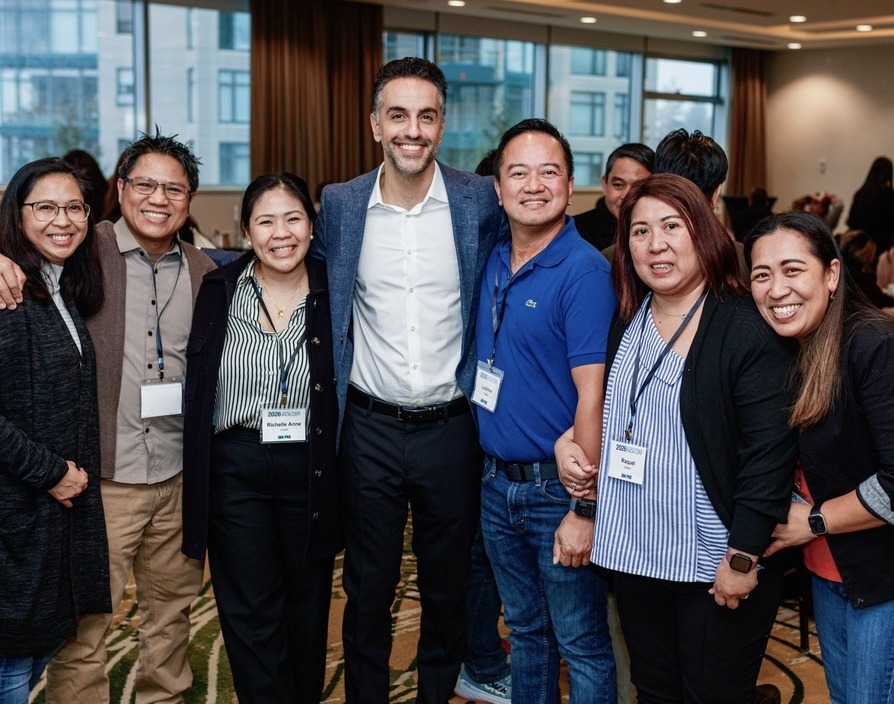
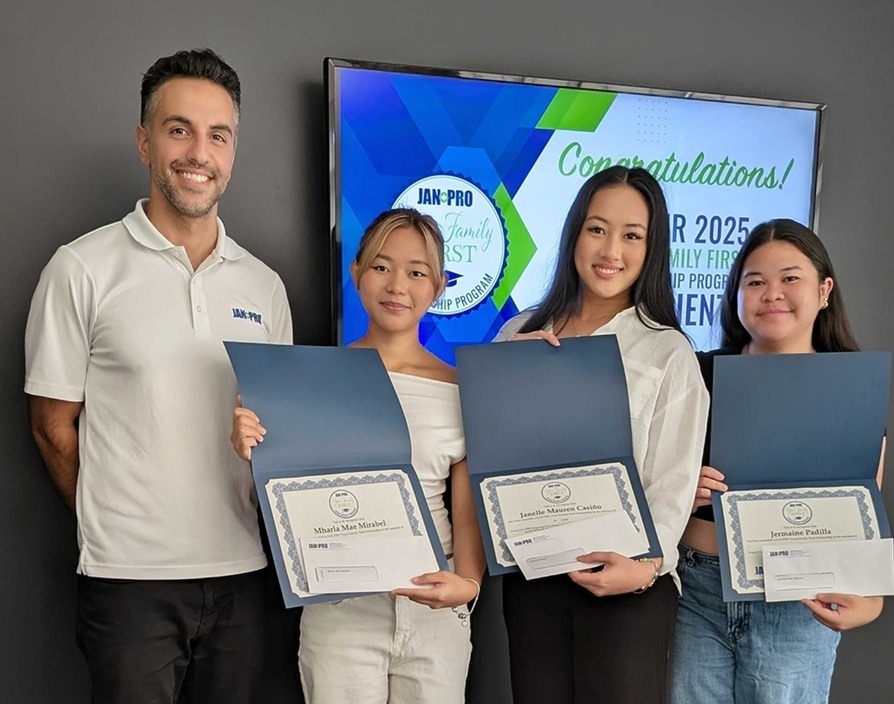
The people-first approach extends into JAN-PRO’s wider community initiatives, including its scholarship program exclusive to franchise owners and their families.
“Our franchisees are not just business partners, they’re like family,” Yeganegi says.
The Your Family First Scholarship supports franchise owners and their families in the pursuit of educational opportunities.
“A lot of Certified Business Owners start their businesses to improve their lives and provide for their families, so this fits very well,” he says.
Looking ahead, Yeganegi sees continued opportunity for entrepreneurs who want to build within the JAN-PRO network. The company is exploring ways to expand beyond cleaning into additional facility services, responding to customer feedback and creating further opportunities for franchise owners.
“We listen to our customers’ needs and do our best to provide a value-based solution to ensure that they can focus on their work, and we focus on maintaining their facilities,” Yeganegi says.
For Yeganegi, the future of franchising remains rooted in the same principle that has shaped his leadership from the beginning – when franchisees succeed, everyone succeeds.
“We’ve got the right people and welcome meeting those who align with our values as a brand that wants to be the absolute best facility service provider available,” he says.
This article comes courtesy of JAN PRO, a global commercial cleaning company and franchise that offers specialized cleaning services for offices, medical centers, and retail spaces.