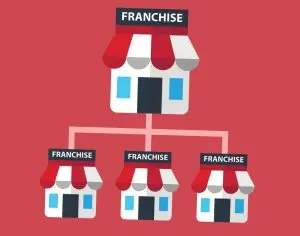

The first fork in the road is choosing your US franchise expansion strategy—do you go direct franchising or sign a master franchise agreement that lets a local partner build the brand? On paper, master franchising US looks like a turbo‑charged entry model, but—as several brands have learned—it can morph into a costly, slow‑motion divorce. Here’s how to decide whether it’s a smart strategy or a future headache.
Master franchising 101
A master franchisee buys master franchise territory rights for a defined region (often an entire country, state or group of states). They pay a master franchise fee up‑front, then earn a share of the fees from the sub‑franchising agreements they sell. In effect, you outsource all day-to-day functions of the franchisor to your master: compliance with local franchise disclosure laws, execution of franchise agreements, site selection, training, development and front‑line support. As a principal franchisor you supply the business model, brand playbook, IP and compliance oversight.
Compare that with area representative agreements, in which the area representative acts as an agent of the franchisor and shares in royalties and initial franchise fees; or with direct franchising, where you grant unit licences to individual operators and keep 100 percent of the royalties. Each route has different franchise expansion capital requirements and control levers.
The upside: Why brands choose masters
Speed and footprint
One signature can deliver 100–300 outlets on a 10-20‑year schedule—gold for investors eyeing quick master franchise ROI.
Local intel
A U.S. master knows the local real estate market, how to recruit in a tight labour market, and which social platforms convert. That know‑how is priceless when you’re figuring out how to expand a franchise from Canada to the US. A master franchisee effectively steps into the role of a franchisor within their designated territory and is considered a franchisor for all intents and purposes.
Shared risk
Up‑front fees and development quotas shift part of the financial burden off the franchisor’s balance sheet.
The downside: Hidden costs & control gaps
Diluted economics
You’ll typically surrender 40–50 percent of the royalty stream; fine at 20 units, painful at 200.
Loss of line‑of‑sight
Support now flows through a third party. If your master under‑invests in training or brand standards, every headline about a “dumpster‑fire joint” reflects on you.
Regulatory double‑jeopardy
You could be the hook for FTC franchise non-compliance and failures to comply with state franchise registration requirements even if the master was responsible for issuing disclosure documents. While this can be partially addressed through airtight indemnification provisions in the master franchise agreement, one bad disclosure in a US franchise registration state can trigger rescission claims across the territory.
Real‑world cautionary tale: A Toronto‑based fast‑casual brand sold U.S. master rights in 2018. The master opened six stores, missed every development quota, and—worse—filed a non‑compliant disclosure in California. Two years later the franchisor spent mid‑six figures buying back the rights and settling franchisee claims.
Success factors: Turning masters into partners
Tight compliance architecture
Deliver your own U.S. Federal franchise disclosure document (FDD), tailored to local market, labor laws, insurance requirements etc.
Calendar all US franchise disclosure requirements updates—you and the master share in that risk.
Crystal‑clear performance benchmarks
Consider linking territory roll‑out to “earned” geography. For example, 10 openings unlock the next five counties.
Include escrow or reversion clauses so you can claw back rights for chronic under‑performance—no courtroom drama required.
Multi‑level training & audits
Host quarterly in‑market audits and mystery shops to protect brand standards.
Stream content directly to sub‑franchisees; don’t rely on the master to translate or adapt your ops manual.
Capital & culture fit
Insist on proof of funds equal to at least 50 percent of total build‑out cost.
Vet cultural alignment. Does the candidate buy into your purpose, or are they flipping territories for a fast buck? A strong master franchise success rate correlates strongly with mission fit.
Is master franchising worth it?
The answer is brand‑specific. If your concept relies on hyper‑local real estate savvy (think convenience food or home services) and you can stomach sharing economics, a master can be the best franchise expansion model. If your secret sauce is obsessive training and unified culture (e.g., boutique fitness or education), the alternatives to master franchising—direct or area representation—may protect quality and long‑term enterprise value.
Decision checklist for Canadian franchisors entering the US market:
- Unit‑level economics. Can you afford to give up part of the royalties yet still cover head‑office support?
- Control matrix. Rank every core function—real estate, ops, marketing, compliance—by who owns it. Any gaps?
- Exit plan. If the master founders or sells to private equity, do you have a buy‑back right?
- Border logistics. How will you supply U.S. franchisees without eating all your margin in cross‑border shipping?
- Litigation war‑chest. Even with great partners, plan for disputes. U.S. litigation is costlier than a downtown Toronto condo.
Final word
Master franchising is neither hero nor villain; it’s a tool. Used surgically, it can vault a Canadian brand into multiple U.S. time zones before your competitors finish their first discovery day. Used recklessly, it becomes a 10 or 20‑year lock‑in with a partner who doesn’t answer the phone. Spadea Lignana has shepherded dozens of cross‑border franchising deals on both sides of the 49th parallel—we can help you decide whether master franchising vs area representation vs direct franchising aligns with your growth goals and compliance budget.
Ready to explore your options? Let’s talk about structuring a compliant, win‑win master franchise that won’t end in headlines—or handcuffs.