For years, franchise marketing strategy has operated on a familiar hierarchy. Earn coverage in the right publications. Rank on page one of Google. Build consistent brand presence across every location. These remain important, but a seismic shift is underway, and franchise brands that fail to adapt will find themselves invisible in the place where buyers are now making decisions.
That place is not a search results page. It is the AI answer itself.
Zero-click search rose from 56% of queries in 2024 to 69% by May 2025
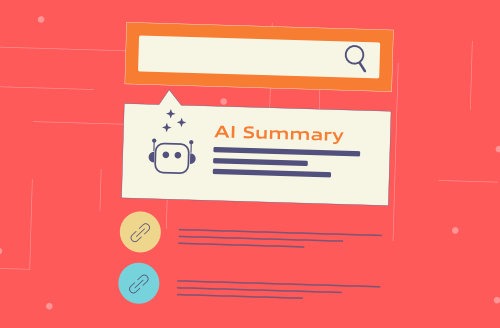
ChatGPT, Perplexity, Google AI Overviews, Claude, Gemini – these platforms are now the first stop for a growing share of consumer and investor research. Zero-click search rose from 56% of queries in 2024 to 69% by May 2025. News site organic traffic fell by roughly 600 million monthly visits in under a year. The buyer did not disappear. They moved into the answer box. And most franchise marketing budgets have not followed them there.
What GEO actually means for franchises
Generative engine optimization (GEO) is the practice of influencing what AI models say about a brand when a user asks a question. It is not SEO, though the two are related. Traditional SEO is about ranking. GEO is about being cited, referenced, and accurately represented inside an AI-generated answer.
The distinction matters enormously in franchising, where the brand operates at two levels simultaneously. At the national level, the franchisor is building brand authority and attracting prospective franchisees. At the local level, individual locations are competing for visibility in specific markets. AI platforms handle both types of queries – and they draw from very different source pools to answer them.
Research analyzing more than 680 million tracked AI citations found that only about 11% of domains are cited by both ChatGPT and Perplexity. A single content strategy cannot win across all AI surfaces. The franchise brand well-represented on one platform may be absent from another entirely.
The franchisor-franchisee structure is both the challenge and the opportunity
In traditional PR and SEO, the central tension has always been consistency at scale. Franchisors control the brand; franchisees control the customer experience. GEO adds a new layer to this dynamic.
AI models do not pull only from a brand’s own website. They synthesize information from third-party media, review platforms, community forums, Wikipedia, and earned media. For franchises, this means the AI’s understanding of the brand is shaped by hundreds of decentralized touchpoints – many of which the franchisor has limited direct control over.
At the same time, this decentralization is also an opportunity. Each franchise location that generates genuine local press coverage, community recognition, or verified customer reviews is contributing to the brand’s overall citation footprint. A franchisee who earns a mention in a regional outlet is doing more than building neighborhood goodwill – they are feeding the sources that AI platforms draw from when constructing answers about the brand. Franchise systems that understand this will build programs that connect local PR activity to national brand authority inside AI systems.
What AI is actually citing – and why it matters
Understanding which sources AI platforms prioritize is no longer optional. The communications industry has long priced the Wall Street Journal, The New York Times and Bloomberg at the top of the hierarchy. Inside the engines that now answer the buyer’s question, none of them crack the top twenty.
Brand-search volume – how often people are actively searching for a brand by name – has emerged as one of the strongest predictors of AI citation likelihood, stronger than backlinks. This means PR investment that drives genuine brand awareness has a direct correlation with GEO performance. In vertically concentrated categories, a single trade publication can account for nearly 9% of all citations in that space, which means strategic placement in the right industry outlets carries outsized GEO value.
The shift franchise brands need to make now
Most franchise marketing budgets are still allocated as though the buyer journey ends at a search result. None of the traditional metrics – placements, clicks, engagement – captures what is happening inside the AI answer, which is now where a significant and growing portion of the buyer journey takes place.
Franchise systems that want to lead in this environment need to approach communications with a new question: not just where will this appear, but will this be cited by an AI when a prospective customer or franchisee candidate asks about the brand?
The franchise brands that begin auditing their AI citation presence now will be positioned to influence those answers deliberately. Citation share is the new market share. The brands that internalize this early will own the answer box. The ones that wait will find themselves explaining to prospective franchisees why their brand does not come up when asked.
Key Takeaways
- Franchise marketing must shift focus from traditional SEO to generative engine optimization (GEO) as AI platforms become primary sources of information.
- GEO emphasizes being cited and accurately represented in AI-generated answers, rather than just ranking on search engines.
- Franchise brands face challenges and opportunities in managing decentralized public perception and AI citations across multiple platforms.
- To succeed, franchises must link local PR efforts to national brand authority in AI systems and understand which sources AI prioritizes.
- Citation share is the new market share; franchises must audit their AI presence now to influence how they’re represented in AI answers.