
The cost of waiting: Why franchise ownership is about more than business
The safest decision can sometimes become the one we regret most. For aspiring franchisees, taking the leap is not about eliminating risk, it is about deciding which risk you are prepared to live with.
There is a question that eventually finds every entrepreneur:
“What would have happened if I had gone for it?”
It may arrive during a quiet drive home, at the end of another long week working for somebody else, or years after an opportunity has passed. It is rarely loud at first. It begins as a small thought, an idea for a different career, a business of your own, or a life with greater independence.
Then time moves on.
The responsibilities grow. The timing never feels quite right. The comfortable paycheque becomes harder to leave. The reasons for waiting become more convincing.
Eventually, “maybe someday” can turn into “I wish I had.”
For prospective franchisees, this tension is very real. Leaving a familiar career and investing in a business is a serious decision. There are financial commitments, operational demands and no guarantees of an easy road.
But there is another risk that receives far less attention: the risk of doing nothing.
There is no risk-free choice
People often treat staying where they are as the safe option. In reality, every decision carries risk.
Starting a franchise may involve capital, uncertainty and hard work. Staying in an unfulfilling career may involve years of frustration, limited control over your future and the lingering question of what you might have built.
One risk is visible because it appears on a spreadsheet.
The other is invisible until years have passed.
That does not mean everyone should resign tomorrow and buy a franchise. Franchising is not an escape hatch, and enthusiasm is not a replacement for due diligence. A prospective franchisee must study the business model, speak with existing owners, understand the economics, assess the support system and determine whether the day-to-day work fits the life they want.
Taking the leap should never mean acting recklessly.
It means refusing to allow fear alone to make the decision.
Franchising offers a bridge
One of the reasons I have always believed so strongly in franchising is that it offers entrepreneurs a bridge between complete independence and the structure of an established organization.
You are building your own business, but you are not beginning with a blank sheet of paper.
A strong franchise system gives owners a recognized brand, proven processes, training, technology, marketing resources and a community of people facing similar challenges. It cannot remove risk, but it can replace some of the uncertainty with a roadmap.
The franchisor has already encountered many of the obstacles a new owner is likely to face. The playbook has been tested. Lessons have been learned, sometimes the hard way, so franchisees do not have to repeat every early mistake themselves.
The opportunity is still yours to pursue. The effort is still yours to make. But you are taking the journey with a system and a network around you.
For someone who has spent years imagining business ownership but has been intimidated by the prospect of starting completely alone, that distinction can be life-changing.
The goal is not to avoid failure
Many aspiring entrepreneurs are waiting for certainty.
They want to know that the business will succeed, that the timing is perfect and that every challenge can be predicted before they begin.
That moment rarely comes.
Experienced business owners understand that setbacks are part of the process. Decisions will occasionally be wrong. Campaigns will fall flat. A promising hire may not work out. Growth may take longer than the original forecast suggested.
The objective is not to build a business in which nothing goes wrong. The objective is to build the resilience, support and self-awareness to respond when it does.
A setback gives you information. It can sharpen your judgment and make the business stronger.
Regret is different. Regret often comes from never giving yourself the opportunity to find out.
A failed attempt can still provide experience, relationships and clarity. An opportunity never pursued may leave only an unanswered question.
The lesson became personal
I have thought about regret differently since losing my dad.
Anyone who has lost a parent understands that the pain never disappears completely. You learn to carry it, but there are still moments when a memory, a place or a familiar routine brings everything back.
There is one thing, and perhaps the only thing, that eases that pain for me, even slightly.
I have no regrets about how I lived my adult life with him.
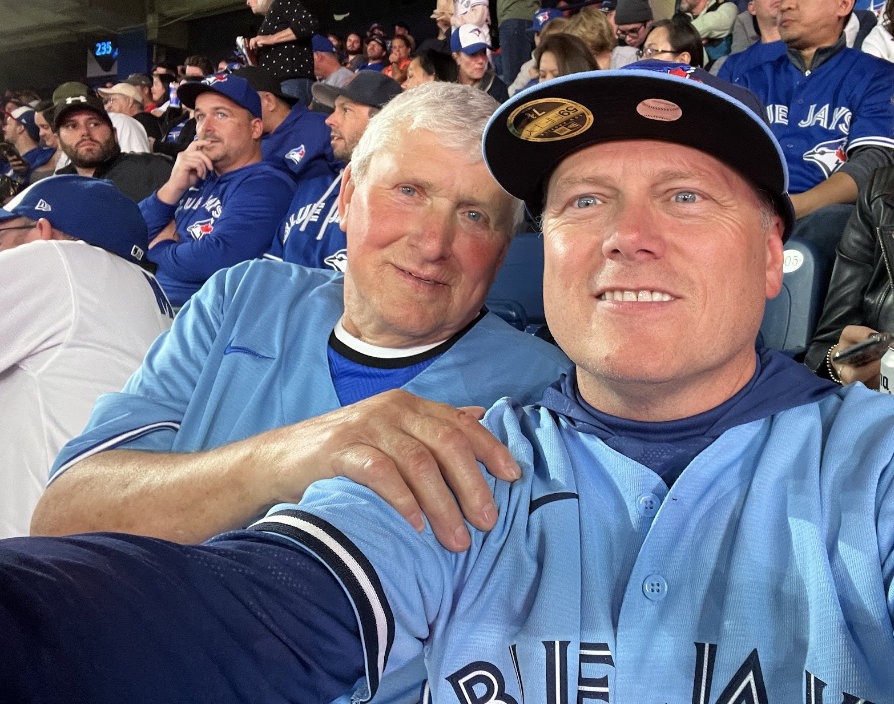
We took the trips. We made the drives to the rink. We went to ball games. We went fishing on Father’s Day. We stayed up late watching our Toronto Maple Leafs, occasionally win, but, more often than we would have liked, lose.
Those moments may have appeared ordinary at the time. Looking back, they were anything but ordinary.
They were the good stuff.
I do not carry the weight of thinking, “I wish we had done that,” or “I wish I had made more time.” Of course, I would give anything for one more conversation, one more game or one more day on the water. Grief will always contain that longing.
But I know that when the opportunities were there, we lived them.
That knowledge does not remove the loss. It gives me a small measure of peace within it.
How I try to live, and lead
That experience shapes how I approach both life and business.
I do not want to postpone every meaningful experience until some imaginary future when the calendar is clear and every problem has been solved. That future does not exist.
I also do not want to look back on an opportunity and realize I rejected it only because I was afraid to leave what was familiar.
In business, this means doing the homework, understanding the downside and then being prepared to move. It means making thoughtful decisions without allowing the pursuit of perfect certainty to create paralysis.
It also means remembering why we build businesses in the first place.
Revenue matters. Growth matters. Winning matters. But business should also help create a life worth living. It should provide opportunities for people, strengthen communities and give owners greater influence over how they spend their limited time.
Success is not much of a victory if achieving it causes us to miss every rink trip, ball game, family dinner and Father’s Day on the water.
The best business decisions should move us closer to the life we value, not further away from it.
What will your future self say?
For anyone considering franchise ownership, there will always be reasons to wait.
Interest rates may change. The economy may feel uncertain. Your savings may not yet be exactly where you would like them to be. There may be another promotion around the corner or another year-end bonus worth collecting.
Some reasons are legitimate. Good judgment matters, and sometimes waiting is the right decision.
But be honest about the difference between preparation and avoidance.
Are you gathering the information required to make a sound decision, or are you repeatedly moving the finish line because taking action feels uncomfortable?
Speak with the franchisor. Talk candidly with franchisees. Review the numbers with qualified advisers. Ask difficult questions about the business, the expectations and the support available. Look closely at your own strengths, motivations and family circumstances.
Then make a decision you can own.
The leap into franchising should be informed, deliberate and grounded in reality. It should never be driven by hype or the promise of instant success.
But once the facts have been gathered and the opportunity aligns with the future you want, courage has to enter the equation.
Someday, you will look back on the decision.
You may remember the nerves, the uncertainty and the work required to get started. You may remember mistakes you made and lessons you learned along the way.
But perhaps you will also be able to say:
“I gave myself the chance.”
In business and in life, that can be the difference between a difficult experience that helped shape you and a question that follows you forever.
We only get so many trips to the rink, so many ball games, so many Father’s Days and so many opportunities to build something meaningful.
Do the homework. Understand the risk. Protect what matters.
Then, when the right opportunity is in front of you, do not let fear write the ending.