
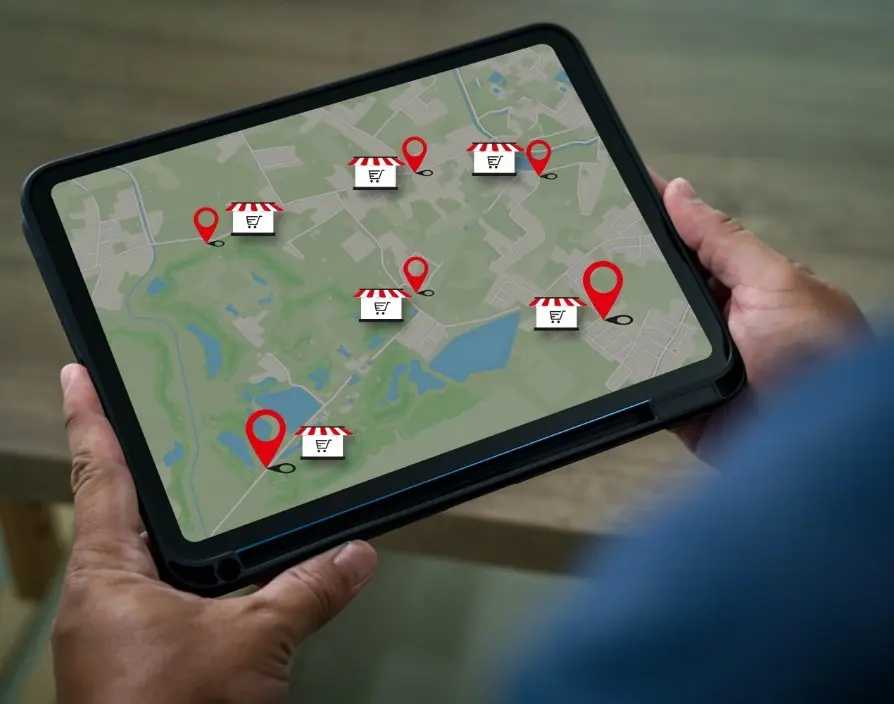
Picture a franchise website with 40 location pages, all built from one template. The only thing that changes from page to page is the city name: Mississauga on one, Moncton on the next.
It was quick, it was inexpensive, and for a while it delivered results.
That era is over, and the shortcut can now do more harm than good. The good news is that a franchise system still holds a real advantage at scale, provided head office and franchisees each take on the right share of the work.
Why the rules have changed
Google has confirmed four spam updates so far in 2026: in March, June, August, and September. The September rollout stretched to almost two weeks, but earlier rollouts were shorter. Google said it applied globally and to all languages, without singling out any one target. What stands out is the pace: existing rules are being enforced more often.
Two of those rules matter most to franchisors.
The first is doorway abuse, and one of Google’s own examples is “pages targeted at specific regions or cities that funnel users to one page.” That is a fair description of a city-swapped template.
The second is scaled content abuse, which means publishing large volumes of unoriginal pages that offer visitors little value, however they were produced.
Google also lists automated translation among those techniques. That is why you should have English-French pages properly reviewed by a native speaker.
The danger for a franchise network is that duplicated pages share the same weakness, so visibility can drop across every location at once rather than one branch at a time.
What head office should build
The answer is not to abandon copy-paste templates but to give them a narrower job. It is about using a shared template in useful and unique ways.
Head office should own everything that needs to stay consistent: the brand story and values, core service descriptions, page layout and design, schema markup, and tracking.
Uniform call tracking, form events and analytics let you compare locations on a level playing field.
Think of the template as the frame. The picture inside it has to come from the franchisee.
What every location should contribute
Focus on collecting real photos, information about your local team, providing local reviews, and each franchise’s specific business hours to make each page genuinely better.
Add named team members with a line or two about each, reviews from nearby customers, and real community ties, whether that is a minor hockey sponsorship, a school fundraiser or a farmers’ market booth, along with the neighborhoods the location actually serves.
Hours and contact details should be specific to each location and match its Google Business Profile exactly.
Here is a simple test: if two location pages could trade places without a single customer noticing, both are vulnerable.
There is a recruitment upside, too. A network where franchisees visibly shape their own local presence is easier to sell to prospective owners.
Roll it out in stages
Begin with three to five contrasting locations, such as a downtown unit, a suburban one, and a small-town one, and let the new pages run for 8 to 12 weeks.
Compare impressions, calls, and inquiries with the old versions.
Note which details franchisees struggled to provide, then build those lessons into a standard intake form and checklist before launching network-wide.
This protects both your brand’s search standing and your franchisees’ time.
Before any location page goes live
Put every page through a few quick questions: Does it feature original photos? Does it name real people? Does it display local reviews? Does it reference at least one genuine community connection? Do the hours and contact details match the Google Business Profile? Would the page still make sense if you deleted the city name?
Scale remains your network’s biggest asset, as long as every page earns its place locally. If you would like help getting there, the Franchise Fame team is just a call or message away.
Key takeaways
- Google confirmed four spam updates in 2026 alone – March, June, August and September – and two of its rules, on doorway abuse and scaled content abuse, matter most to franchisors with templated location pages.
- Duplicated location pages share the same weakness, so visibility can drop across every location at once rather than one branch at a time.
- Head office should own what needs to stay consistent – brand story, core service descriptions and page structure – while leaving named local team members, local reviews and community details to each individual franchisee.
- A simple test for any location page: if two pages could trade places without a single customer noticing, both are vulnerable.
- Roll out local differentiation in stages, starting with three to five contrasting locations and comparing impressions, calls and inquiries against the old pages before expanding the approach across the network.