

In construction, particularly franchise-based construction, achieving scale is rarely about speed alone. It is more about control.
And that’s what drives CEO Omran Ismail’s thinking about systems, delivery, and the practical realities of building multiple locations at once.
Explaining why Trivex Group was built differently from traditional contractors Ismail, also co-founder of the group, says the issue begins with responsibility.
“From my experience, traditional general contractor models tend to separate decision-making from execution. That distance weakens accountability, especially in franchise environments where timelines, budgets, and brand standards are non-negotiable. From the founder’s seat, it became clear that the people closest to the work needed real ownership. We built Trivex Group around a partner-operated model so responsibility and outcomes are aligned. That alignment is what drives consistency at scale.”
And it becomes especially important during franchise rollouts, where repetition and consistency matter more than individual project improvisation.
Partner-operated construction and rollout clarity
Ismail says the partner-operated approach fundamentally changes how franchisors and operators experience construction delivery, particularly when multiple locations are involved, delivering a much more transparent and manageable process.
“As an operator, the biggest difference I see is clarity. Franchisors are not dealing with layers of management relaying information. They are working with partners who are directly accountable for delivery. That shortens feedback loops, improves coordination with trades, and reduces surprises. For multi-unit operators, projects feel controlled and predictable rather than reactive.”
That predictability is not accidental. It is built on systems, preparation, and discipline, themes that are central (crucial even) to the firm’s approach.
Scaling franchise construction without losing control
Growth, Ismail suggests, often exposes weaknesses that were not obvious at smaller scale, and in franchise construction, those weaknesses frequently appear when cost pressure and (to borrow a line from a film) a need for speed collide. Proper investment and patience is essential he says.
“From my experience, one of the biggest mistakes is prioritizing short-term cost savings over long-term reliability. Many franchisors choose the lowest-priced contractor, assuming construction is a commodity. In reality, that decision often ends up costing more through delays, rework, missed openings, and brand inconsistency. Another common mistake is trying to scale before systems are fully defined. Speed without structure breaks down quickly once projects overlap.”
The distinction between supervision and systems is central to maintaining consistency across locations. Rollout programs that depend on constant oversight rarely scale smoothly.
“Consistency comes from systems, not supervision. Successful rollout programs invest early in standardized scopes, sequencing, and approval processes. When expectations are clear before construction begins, execution becomes repeatable. When those foundations are missing, every location becomes a custom problem.”
Managing compliance across multiple jurisdictions
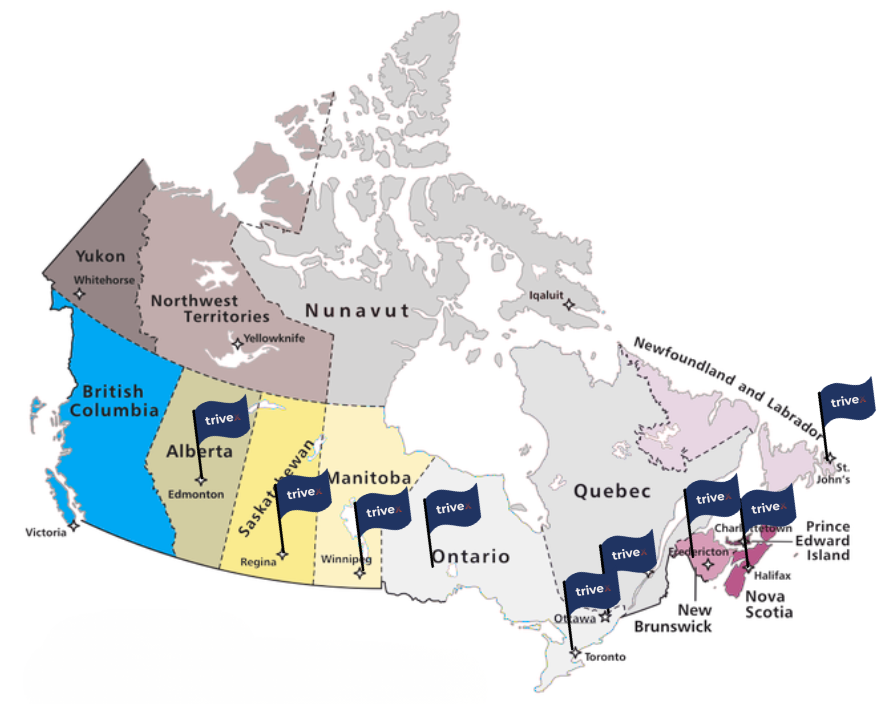
Like many franchise operations, it is all about trust in the operational structure that has been created. But that idea of repeatable execution becomes more complicated when construction projects cross provincial and regulatory boundaries.
Construction across Canada introduces layers of regulatory variation that require a sophisticated level of planning rather than reactive problem-solving.
“We treat compliance and cost control as inputs, not afterthoughts,” he explains. “Each province has different regulatory requirements, and those differences are accounted for early in the planning phase. Standardized reporting, disciplined budgeting, and partner-level accountability allow us to maintain control even when projects span multiple jurisdictions.”
Within franchise systems, timelines and budgets are rarely flexible. Missed openings or cost overruns can ripple through an entire rollout strategy. That makes predictability a behavioral issue as much as a planning one.
“From my experience, predictability comes from realism. We focus on clearly defined scopes, accurate sequencing, and early risk identification. Rather than relying on optimistic assumptions, we plan for real-world conditions. When timelines and budgets are treated as commitments rather than targets, behavior changes across the entire project team.”
Leadership shaped by hands-on construction experience
The Trivex leadership philosophy plays a role in how those expectations are communicated and enforced across an organization.
Ismail’s approach to leadership is about getting to end-point, but achieving it through a considered and well-planned approach.
“Having come from a hands-on background, I understand how decisions made at the leadership level affect execution on the ground. That experience shaped a leadership style focused on preparation, clarity, and accountability. I pay less attention to activity and more attention to outcomes.”
That execution-first perspective extends to regulatory planning, which Ismail says franchisors frequently get wrong-footed by during national expansion.
“Regulatory complexity is often underestimated. Fire codes, health requirements, accessibility standards, and municipal approvals vary significantly across regions. When those differences are not built into the rollout strategy early, they lead to delays and rework later. Regulation itself is manageable. Underestimating it is what causes problems.”
Pressure can come at any stage of the process and, in Ismail’s view, is a great way to find out just how strong your set-up is
“One clear lesson from my experience is that pressure does not create problems, it exposes them. Tight timelines and fixed budgets quickly reveal whether systems are strong or fragile. Franchisors that invest early in structure, accountability, and disciplined execution are far better positioned to grow nationally without losing control.”
Reliability over lowest price in franchise growth
For franchisors planning multi-unit development, construction partners play a central role in determining whether expansion stays under control or becomes unpredictable.
Ismail believes that scalability depends less on price competition and more on operational reliability. So the choice of who to use as a contractor really matters.
“I would say franchisors should prioritize partners who think in systems, not just individual projects. Experience across jurisdictions, strong internal controls, and a proven ability to deliver consistently matter far more than choosing the lowest price. Scalability depends on reliability, not shortcuts.”
Taken together, Ismail’s comments point at a theme running through franchise construction strategy, that says growth is less about building faster and more about building consistently.
The partner-operated construction model is a mechanism for aligning systems with outcomes.
For franchisors navigating national expansion, that alignment may ultimately determine whether growth is not only achievable but remains controlled, repeatable, and sustainable.