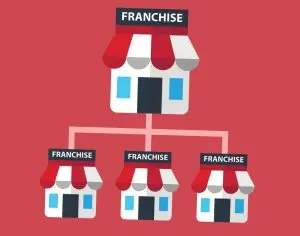

… inside cafés, fitness studios, home services, childcare centres, and specialty retailers with proven demand, loyal customers and a structured scalable approach.
According to Canadian Franchise Association (CFA) industry insights, 72% of small business owners say they intend to expand within the next two years. Yet fewer than one in five has a viable growth strategy in place. The disconnect has created a widening “franchise-readiness gap” that is quietly holding back thousands of scalable Canadian businesses.
Founders find themselves caught between ambition and execution. They sense growth is possible, but lack clarity on how to navigate the legal, operational, and financial realities of sustainable growth, particularly in an economic climate that rewards discipline as much as innovation.
Rethinking growth for Canadian founders
Growth often starts organically. A second location opens. Interest from new markets builds. Expansion signals that a business model is working.
But scaling requires more than demand. Founders must replicate their customer experience, maintain brand consistency, and build systems that support multiple locations. Traditional expansion can require significant capital and centralized oversight — a model that works for some, but not all.
Franchising offers another path. While sometimes overlooked by emerging brands, it has a long track record in Canada. Many recognizable brands began as single-location businesses that focused on building scalable foundations first. Done strategically, franchising enables growth through aligned partners while protecting brand integrity.
Why franchising keeps outperforming other growth models
Franchising remains one of the most resilient and scalable growth strategies because it aligns expansion with shared accountability. Instead of shouldering the full financial burden, franchisors grow alongside franchisees who are personally invested in the success of their location. Capital requirements are distributed. Local market knowledge is integrated into the system. And when economic pressure hits, franchise networks tend to adapt faster than independent operators.
This resilience is particularly relevant now. Rising operating costs, labour challenges, and cautious consumer spending have made sustainable growth more important than rapid expansion. Franchise systems, when built properly, are designed to weather uncertainty through shared best practices, centralized support, and proven operating models.
But franchising isn’t a shortcut. It demands structure and a fundamental shift in leadership mindset. For many founders, the challenge isn’t ambition, it’s access to practical guidance.
Franchise Your Business: Learn How to Grow Through Franchising
To support entrepreneurs exploring expansion, the Canadian Franchise Association (CFA) hosts Franchise Your Business, a virtual seminar running on February 12,May 14, July 9 and September 10, 2026 from 11 a.m. to 4 p.m. ET.
Designed for entrepreneurs considering franchising, early-stage franchisors, and new team members within franchise systems, this expert-led program delivers a step-by-step guide to franchising successfully in Canada. Led by award-winning consultants, lawyers, accountants, bankers, marketing experts, and experienced franchisors, the seminar covers everything from assessing franchise readiness and building strong unit economics to legal compliance, financial planning, operations development, and franchisee recruitment.
Produced by the CFA, the voice of franchising in Canada, the program is a one-stop opportunity to learn directly from seasoned franchise professionals across industries.
A new generation of Canadian franchisors
What’s emerging is a new generation of Canadian franchisors. These aren’t cookie-cutter concepts, They’re businesses that reflect regional identity, diverse ownership, and evolving consumer expectations.
From wellness and food service to home improvement and education, these brands are scaling nationally faster than ever before, not because they’re chasing hype, but because they’re building systems that work.
As founders look ahead to the next phase of their journey, closing the franchise-readiness gap may be one of the most important steps toward unlocking Canada’s next national brands.