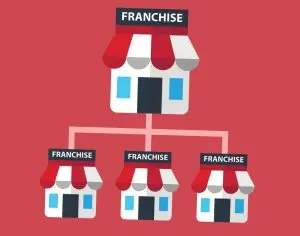

But for every success story, there’s a quieter group of business owners who chose to franchise, expanded quickly, and then walked away.
Why? It’s rarely because the business didn’t work—it’s because they didn’t enjoy being a franchisor.
What it really takes to become a franchisor
Becoming a franchisor is not just about selling more units—it’s about building a system and supporting the people who buy into it.
Time commitment – In the early years, expect 60–80 hour weeks building training manuals, refining operations, visiting franchisees, and solving problems you didn’t anticipate.
Hands-on leadership – You can’t lead from a boardroom too early. If a franchisee has a line of customers out the door, you should be ready to roll up your sleeves and help, just like I learned during my own time at Tim Hortons. Those moments build respect and trust faster than any conference call ever could.
Operational excellence – Your systems have to be watertight, because one underperforming location can damage brand perception for all.
When the dream turns sour
Some brands discover they simply don’t like the franchising model:
Loss of control – Every franchisee is an independent business owner, and that means they won’t always do things your way.
Shift in role – Your job changes from “running the business” to “coaching others to run the business,” and not every founder loves that transition.
Constant pressure – You’re not just making your own business successful anymore—you’re responsible for ensuring dozens (or hundreds) of others succeed too.
This is where many founders step away. The skill set for running one great store is not the same as running a great franchise network.
The myth of automatic success
One of the most dangerous assumptions in franchising is: “If it works here, it will work anywhere.”
A concept that’s thriving in one neighborhood can flop somewhere else due to cultural differences, local competition, economic shifts, or simply the wrong franchisee fit.
Market research, pilot programs, and realistic timelines are essential—skip them, and even a proven brand can face costly closures.
Collaboration over command
The strongest franchise systems are built on collaboration and motivation, not just management.
Franchisees are your partners, not your subordinates.
Involving them in decision-making, listening to their feedback, and celebrating their wins keeps your system healthy and engaged.
A motivated network often outperforms a perfectly designed system—because people, not manuals, drive results.
Money matters—but so does mindset
Yes, franchising can be profitable. Royalty fees, initial franchise fees, supplier agreements—they all create strong revenue streams. But if your mindset isn’t right—if you’re unwilling to serve coffee at 6 AM alongside an overwhelmed owner—those revenue streams will dry up faster than you think.
Franchising is about people first, process second, and profits third. Get the first two wrong, and the third will vanish.
Final word
Before you franchise, ask yourself:
Am I ready to work harder than I did building my first location?
Can I shift from “being the operator” to “being the coach”?
Do I understand that success in one market doesn’t guarantee success in another?
Am I willing to lead from the front—not just the top?
Franchising can transform a great business into a great brand. But if the role, responsibilities, and realities don’t align with who you are as a leader, it can also become a burden you regret.