
Entrepreneurship has a reputation for unpredictability. Long hours, shifting priorities and the feeling that there is always another problem demanding attention are often treated as unavoidable parts of building something of your own.
But unpredictability is not the same thing as entrepreneurship. Some of the strongest business models are built around knowing what is coming next, creating systems to deal with it and using that structure to make better decisions.
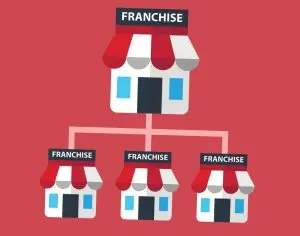
That is one of the advantages franchising can offer. The owner remains responsible for the performance and development of their business, but operates within a framework designed to make many of its moving parts easier to anticipate.
Predictability creates room for better decisions
At Stagecoach Performing Arts, our schools operate around the academic year. Terms begin and end at known points, enrolment and re-enrolment follow recognisable patterns and performances provide regular milestones throughout the calendar.
That visibility matters commercially. Recruitment activity can be planned ahead of a new term, staffing requirements anticipated and marketing focused around periods when families are making decisions. Quieter weeks also create opportunities to review performance and prepare for the next intake.
Instead of constantly reacting to events, owners can spend more time looking ahead and deciding where their attention will have the greatest effect. There will always be unexpected situations in business, but a predictable underlying rhythm makes them easier to absorb.
Systems should protect entrepreneurial energy
There can be a tendency to think of systems as the unexciting side of entrepreneurship. I see their value differently. Good systems protect the time and energy an owner needs to lead.
Within a franchise, established processes around areas such as compliance and operations mean the franchisee does not have to create every element independently. At Stagecoach, expert-led curricula also provide a strong foundation for what happens in the classroom.
That creates capacity elsewhere. Franchisees can focus on developing their teams, strengthening relationships with families, building their local reputation and identifying opportunities for growth.
The entrepreneurial thinking has not disappeared. It is simply being directed towards developing the business rather than repeatedly solving operational problems that have already been addressed elsewhere in the network.
Repetition becomes business intelligence
Predictability becomes even more useful as experience builds. When a business follows a recurring cycle, each term provides information that can make the next one stronger.
Franchisees learn when enquiries tend to increase, when families make re-enrolment decisions and when marketing may need additional attention. Measures such as trial-to-enrolment conversion, student retention and the cost of acquiring a new student can also be compared from term to term.
Patterns gradually replace assumptions. An owner can see what worked, identify where pressure points occurred and make adjustments before the same challenge appears again.
That matters because sustainable growth rarely comes from simply reacting faster. It comes from understanding the business well enough to anticipate what is likely to happen and preparing accordingly.
Even busy periods can become repeatable
Performances demonstrate this particularly well. Whether a school is organising a local showcase or preparing students for one of Stagecoach’s exclusive performance opportunities at Disney, there are multiple moving parts to coordinate.
Yet those events are also recurring parts of the model. Venue arrangements, licensing, rehearsals, costumes and communication with families can be organised against established timelines. What might otherwise become an operational scramble becomes a process the business learns to manage.
The excitement remains, but the chaos does not have to. Each event also gives the owner and their team another opportunity to refine how they work together, making the next busy period easier to navigate.
Structure can support ambition
Perhaps the misconception worth challenging is that a predictable business must somehow be an unambitious one. In reality, structure can give owners a stronger platform from which to decide what growth looks like for them.
For one franchisee, that may mean developing a successful school with deep roots in its community. Another may want to grow student numbers, expand their team or develop their operation further over time.
A proven model does not make those decisions for the owner. It provides a framework within which they can make them with greater information, support and operational clarity.
For prospective franchisees, that is an important way to think about independence. Entrepreneurship does not have to be measured by how much uncertainty someone is willing to tolerate.
There is considerable skill in building a business where the fundamentals are understood, the rhythms become familiar and attention can be focused on the decisions that genuinely move it forward.
Predictability, used well, does not restrict entrepreneurial freedom. It creates the space to use it.
Key takeaways
- Predictability is not the opposite of entrepreneurship – structured franchise models create the conditions for better strategic decisions.
- Stagecoach Performing Arts schools operate on academic term cycles, giving franchisees advance visibility to plan recruitment, staffing and marketing.
- Established franchise systems handle compliance and operational processes, freeing franchisees to focus on developing their teams and growing their business.
- Recurring business cycles generate intelligence over time – franchisees learn when enquiries peak, when families re-enrol and when marketing works best.
- A proven franchise model does not limit ambition; it provides a framework within which franchisees can pursue growth on their own terms.