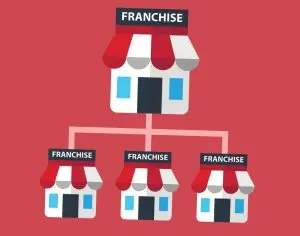

A franchise can look flawless on paper. The brand is established, the model is proven and the projections look promising. Yet none of those things tells a prospective owner exactly what the business will feel like to run when the launch excitement has passed and an ordinary working week begins.
That is why good due diligence should go further than validating the figures or understanding the franchise agreement. Prospective owners need to test how the model, support and customer proposition work in practice, including when things do not go according to plan. Here, Lisa Stead, CEO of Stagecoach Performing Arts, discusses five ways to look beyond the brochure before making a long-term franchise commitment.
Find out what happens after training
Initial training matters, but the more revealing question is what happens afterwards. Comparing the number of training days different franchises provide will only tell you so much about the support you will receive as an owner.
Ask what your first year will actually look like. If customer numbers slow or a local marketing campaign underperforms, who will you speak to and what happens next?
It is also worth asking what the franchisor has changed about its support recently and why. A healthy network should continue learning from the experiences of its franchisees rather than assuming the systems that worked several years ago will always be enough.
Understand why customers stay
Financial projections deserve careful scrutiny, but ultimately customers determine whether those projections become reality. Due diligence should therefore investigate customer behaviour as closely as the numbers.
At Stagecoach, children experience the classes while parents make the purchasing decision. The franchisee needs to deliver something children want to return to while developing the confidence and trust that encourages parents to maintain that relationship.
Ask what turns a three-month customer into a three-year customer. The answer can reveal whether retention is genuinely embedded in the proposition or whether the model depends heavily on continually finding new customers.
Picture an ordinary Tuesday
Franchise recruitment naturally focuses on exciting moments: opening the business, reaching milestones and growing a territory. Ownership, however, is mostly made up of ordinary working days.
Speak to existing franchisees and ask them to describe one. What occupies their time? What can they delegate? Which responsibilities surprised them when they first became an owner?
This can be particularly useful when the reality of the role differs from the obvious perception. Someone exploring a performing arts franchise might assume they will spend most of their time teaching. Stagecoach franchisees can instead be leading teams, overseeing standards, developing community relationships and driving local growth, with flexibility over how involved they are in delivery.
The important question is whether you want the everyday job, not simply the opportunity described on paper.
Give support a bad-month test
Franchisor support is easy to describe when everything is going well. A more useful test is what happens when it is not.
Give the franchisor a realistic scenario. You are six months into the business, revenue is behind target and your latest marketing activity has underperformed. What happens on Monday morning?
Listen for specifics. Who gets involved? What information would they review? What action might you take together?
Then ask existing franchisees about occasions when they have needed support most. Hearing how a difficult situation was handled can reveal much more about a franchise relationship than another success story.
Look for evidence of evolution
A proven system should provide consistency without becoming static. Customers change, markets develop and new opportunities emerge, so prospective franchisees should understand how a network responds.
At Stagecoach, Mini Stages has created a way to connect with families with children from the age of two, while the Parkdean Resorts partnership provides another environment in which families can experience the brand. Both demonstrate how an established proposition can continue developing.
For international franchises, another question follows: what remains consistent across markets and what can adapt locally? Sustainable expansion depends on balancing the strength of a wider network with relevance in individual communities.
Finally, pay attention to the recruitment process itself. A franchisor that welcomes difficult questions, encourages conversations with existing franchisees and assesses your suitability carefully is giving you useful evidence about the partnership from the outset.
No due diligence process can remove every uncertainty from business ownership. But if an opportunity still stands up after you have tested the ordinary days, the difficult months and the questions a brochure cannot answer, you are making your decision with something far more valuable than a polished presentation: evidence.
Key takeaways
- Good franchise due diligence goes beyond validating figures – the most revealing questions focus on what happens after initial training and how support works when things go wrong.
- Ask what your first year will actually look like and what changes the franchisor has made to its support recently – a healthy franchise system improves over time.
- Understanding why customers stay, not just why they join, is critical – ask what turns a three-month customer into a three-year customer to reveal whether retention is built into the model.
- The bad-month test is one of the most useful tools in due diligence: give the franchisor a realistic scenario of underperformance and listen for specifics, not reassurances.
- A franchisor that welcomes difficult questions and introduces prospective franchisees to existing owners without restriction is demonstrating confidence in its own model.