
Home care is a people business. And growing a home care franchise is not simply about opening more offices and finding more customers. It is about building relationships, developing teams and maintaining standards in a business where the quality of the service is absolutely everything.
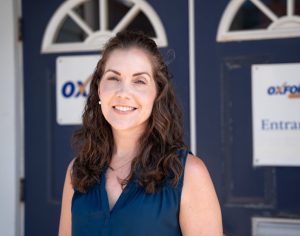
Dani DePetrillo, chief operating officer of Right at Home Canada, believes it’s that human element that is the foundation of the business. With 61 Canadian offices, the challenge is to combine the resources and consistency of a national network with the personal touch of locally owned businesses.
“I believe the key to our growth has always been trust and relationships,” says DePetrillo. “Home care is a 100% people business. Whether it’s with our clients and their families, our caregivers, our care office owners, or the communities we serve, those connections are the foundation of everything we do.
“Our care office owners are at the centre of that success. They’re local business owners who are personally invested in their communities.”
DePetrillo has first hand experience of that responsibility. Before joining Right at Home, she owned and operated healthcare businesses, including rehabilitation clinics. When the RAH brand arrived in Canada in 2012, she sought to understand the franchise operation from the ground up.
“When we brought the brand to Canada in 2012, I insisted on becoming Right at Home’s first care office owner so I could learn firsthand what it takes to bring it to a new community and build it from the ground up. I’ve had the honour of experiencing this business from almost every perspective, and that has shaped how I lead today.”
The experience gave her an appreciation of the less glamorous realities of running a care business, where staffing problems, family concerns and operational pressures rarely arrive at convenient times.
“I know what it’s like to answer the phone at two o’clock in the morning because a caregiver is ill,” she recalls. “I understand the pressure of managing staffing while supporting families, maintaining quality and trying to grow a business.”
Her view is that successful operations depend on getting the people and culture right, rather than assuming that technology or a specific business model can do all the heavy lifting.
“I believe a successful home care operation starts with exceptional people who genuinely care about their work. They need strong support systems and leadership they can rely on, within a culture where everyone takes responsibility for the client and caregiver experience. You can have the best technology and business model in the world, but great care depends on compassionate caregivers and engaged leadership that nurtures their passion.”
Specialist care and understanding families
The wide range of needs within home care means that a one-size-fits-all approach is unlikely to deliver the best results. Right at Home has developed number of specialist programs covering conditions including Parkinson’s disease, Alzheimer’s, dementia, acquired brain injuries and spinal cord injuries.
“Our approach is to equip our local care teams with the knowledge and training to understand the specific challenges associated with these conditions, along with resources and guidance to respond appropriately.”
But the expertise is not just about the person receiving care. Families can find themselves having to navigate unfamiliar conditions while coping with changes to relationships that may have existed for decades.
“I remember talking to adult daughters distraught about who their mom has ‘become’. A relationship of 50, 60-plus years has a steady track of expectations, and dementia, Parkinson’s or even cancer can knock it off that track. Cognitive change is the biggest condition we support, and what looks like stubbornness or defiance may reflect changes the family doesn’t yet understand.”
That is where specialist knowledge can provide practical as well as emotional support, helping relatives understand what is happening and how to respond.
“It’s emotional to grapple with that changed relationship. Our specialized care teams can explain what’s happening and share practical approaches that make family caregiving more manageable.”
Technology that supports human care
Technology is another area where Right at Home is developing its proposition. Its Sensi platform uses audio-based monitoring to add an additional layer of care.
“Sensi is an audio-based, wireless technology platform that helps our care teams recognize meaningful changes and patterns in the home,” explains DePetrillo. “It doesn’t use cameras or require the client to wear a device. It can flag sounds or changes in usual patterns that may warrant attention, including a possible fall, calls for help or signs of distress. These insights may prompt follow-up on concerns that haven’t been apparent to family members or our care team; they aren’t a diagnosis.”
It is intended to give care teams additional information, not to make clinical judgements or replace the people delivering the service.
“What makes this particularly valuable is how we can use those insights to make better-informed care decisions. For example, we might discover that a client who appears to be managing quite well during our daytime visits is experiencing unseen challenges overnight. Or we may recognize changes in routines or behaviours that suggest their needs are evolving. Rather than simply adding more hours of care without understanding what’s happening, we can use that information to determine where and when human support will have the greatest impact.
“Sensi isn’t intended to replace human judgment. It flags information that may warrant attention; our people interpret it and determine whether follow-up is needed. That distinction is fundamental to how we use it.”
The development of Sensi Solo also creates an opportunity to engage with people who may not yet need private home care but are beginning to consider what additional support might look like.
“Having greater visibility can help us have more informed conversations about when care may be appropriate, rather than introducing services before they’re needed.”
The wider RightCare+ proposition brings together technology and personal support, with the aim of helping clients remain at home independently for as long as possible.
“RightCare+ combines person-centred human care with 24/7 technology providing visibility between visits, and represents an evolution in how we deliver home care. We’re combining the relationships and expertise that have always defined Right at Home with technology that helps us better understand what happens when we, or the family, are not physically present.”
Personalised care, not standard packages
Technology may provide a clearer picture of what is happening at home, but the starting point for care planning remains the individual. DePetrillo is keen to avoid a model where clients are simply fitted into pre-determined packages.
“I often say our clients are like snowflakes. Every one is unique, with their own circumstances, abilities, challenges, preferences and expectations. Even two people with the same medical condition can have completely different lifestyles and family dynamics, and different ideas about successful care.
“We don’t believe people should have to fit into a predefined service package. We start by understanding the whole person and their home environment, including the people and services already supporting them.”
That philosophy also informs the relationship between the national organization and its local offices. Right at Home has recently received a three-year accreditation from CARF International, which DePetrillo sees as recognition of the standards maintained across the network.
“Achieving this accreditation is an incredible validation of the work our entire network has put into building a consistent and accountable organization that is genuinely focused on quality. But accreditation isn’t something you achieve and then put on a shelf. It’s a commitment to continually evaluating and improving how we operate and support our people, with the goal of improving care for our clients and their families.”
Franchisee support beyond the training room
There is also a considerable amount of operational support behind the franchise proposition. The 18-month RightStart program is designed to give new owners time to learn the complexities of running a home care business, with experienced professionals alongside them.
“That’s the philosophy behind our 18-month RightStart program. I often describe it as a driving experience. Initially, we’re in the driver’s seat, and the new care office owner is in the passenger seat, or perhaps even the back seat, depending on where they are in their learning. We’re operating the business alongside them as they observe and participate, gradually understanding how everything works. As their confidence grows, we change seats. Eventually, they’re driving, and we’re in the back seat occasionally telling them when to turn left or right. Back-seat driving is a must in many cases!”
The support doesn’t stop when the training period ends. A centralized administrative platform provides scheduling, telephone coverage, billing and payroll support, helping owners concentrate on developing their businesses and community relationships.
The 24/7 Work-Life Balance Program is particularly personal to DePetrillo, having emerged from her own experience of being responsible for every operational call as a new owner.
“I learned firsthand that there’s an enormous difference between owning a business that provides care around the clock and having to be personally available around the clock. I didn’t want other care office owners to experience what I experienced in those early days, and that’s why we developed our 24/7 Work-Life Balance Program.”
The future of home care in Canada
Looking ahead, DePetrillo believes the opportunity is about changing expectations as much as an ageing population. Families are becoming more familiar with the realities of arranging care and increasingly conscious of the options available to them.
“Over the next five years, I see Right at Home continuing to expand our role as a comprehensive care solutions provider, with increasingly specialized services and stronger integration with healthcare and community partners. Technology will also play an important role in helping us better understand changing needs.”
And what makes the ideal franchise owner? A healthcare background is not an essential, but the right attitude certainly is.
“What you do need is a genuine passion for people, strong emotional IQ, a heart of gold and a willingness to learn. You need to be comfortable building relationships and understand that this is a sophisticated, people-intensive business that requires engaged local leadership.
“There are many businesses you can own, but not many where your work can have such a profound impact on someone’s life.”
This article comes courtesy of Right at Home Canada.