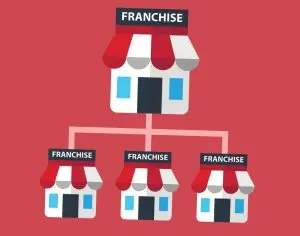

Artificial intelligence is changing digital marketing at remarkable speed. Advertising platforms are becoming more automated, generative AI is accelerating content and creative development, and increasingly sophisticated systems can analyze enormous amounts of data to identify patterns and make decisions faster than any individual marketing team could.
For franchise organizations, these developments create enormous potential, but they also amplify a challenge that has existed for decades. A franchisor can have an exceptional marketing team, sophisticated agency partners, strong creative, advanced advertising capabilities and access to the latest AI technology, but somehow all of that sophistication still needs to reach hundreds or thousands of individual franchise locations.
Franchise marketing has a last-mile problem.
Why local execution remains difficult
Franchising is fundamentally built around scale. Successful systems take processes, products and expertise developed centrally and create a framework that allows them to be replicated consistently across many independently operated businesses.
Marketing has always been more complicated because consumer behaviour is inherently local. A national campaign may be strategically sound, but individual locations can have very different competitive environments, customer needs, budgets, capacity and business priorities. As Reshift Media has previously explored, this creates a franchise marketing paradox: the standardization that makes franchising successful can conflict with the growing importance of local relevance in digital marketing.
Historically, franchise organizations have addressed this challenge in several ways. Marketing can be managed centrally, which provides consistency and expertise but makes deep localization difficult. Responsibility can be delegated to franchisees, which provides greater local flexibility but makes results dependent on each owner’s time, interest and marketing knowledge. Brands can also provide agency support at the local level, although delivering individualized service to hundreds of relatively small advertisers can quickly become expensive and operationally difficult.
AI changes the economics of local marketing
Much of the current discussion about AI in franchise marketing has understandably focused on generative AI. Marketers can use AI to develop copy, images, video, research and other content significantly faster than was previously possible. Those applications are important, but they represent only one part of the opportunity for franchise systems.
One of the most consequential applications of AI may be its ability to help make sophisticated local marketing economically viable at scale.
Consider a franchise system with 300 locations. Creating genuinely localized digital advertising could require hundreds of variations involving location information, geography, copy, creative, budgets, offers, landing pages and other campaign elements. Those campaigns then need to be deployed, monitored and optimized across platforms such as Google, Meta and others.
Historically, much of that work required people to repeatedly perform similar tasks for every location. AI, automation and programmatic localization are increasingly allowing franchise organizations to approach the problem differently.
A campaign can be developed centrally, with the strategy, brand standards, creative and parameters established by experienced marketers. Technology can then use location data and predefined rules to create relevant local executions across the network. AI can assist with appropriate variations, analysis and optimization while automation manages many of the repetitive tasks involved in deploying at scale.
This creates an important change in the economics of franchise marketing. Instead of requiring a marketing team to manually recreate the same strategy hundreds of times, brands can increasingly build a strong campaign once and intelligently extend it across their network.
AI requires better structure, not less
Using AI at scale also creates new responsibilities for franchise organizations. The quality of the output depends heavily on the quality of the inputs, rules and data surrounding it.
At Reshift Media, years of developing technology and processes to programmatically localize digital marketing for franchise systems has revealed that effective AI implementation requires clear decisions about where technology should have flexibility and where human expertise and brand governance need to remain firmly in control.
A franchisor may determine the overall campaign strategy, approved creative, brand standards, available offers and the parameters within which localization can occur. Location data can then determine geography, business information and other local variables, while AI and automation can help adapt, deploy and optimize the campaign within those established guardrails.
This type of structured approach allows brands to benefit from AI without sacrificing the consistency that makes a franchise system valuable.
Franchisees have valuable local intelligence
Closing the last mile also requires thinking differently about the role of the franchisee.
Local owners possess information that head office and technology often do not. They know when their business has excess capacity, which services customers are asking for, what is happening in their community and where new competitive pressures are emerging. The challenge is making that local knowledge useful without requiring franchisees to become digital marketing experts.
A franchisee should not need to understand Google Ads bidding strategies, Meta campaign structures, audience signals or the technical mechanics of advertising algorithms to participate effectively in local marketing. Their involvement should centre on business decisions they are uniquely qualified to make: which initiatives are relevant to their market, how much they want to invest, whether they have local opportunities to promote and where they need additional business.
Technology can increasingly manage the complexity between those decisions and the digital platforms where campaigns ultimately run.
From local execution to network intelligence
When hundreds of locations manage their marketing independently, much of what each location learns remains isolated. One location may discover that a particular message performs exceptionally well, while another may struggle with a similar challenge without benefiting from that insight.
AI creates the opportunity to analyze patterns across much larger datasets. A connected franchise marketing ecosystem can potentially identify which creative approaches are working, how performance differs between markets, which campaigns are generating results and where emerging opportunities or problems exist.
This aligns with a broader shift in AI-powered advertising. As advertising platforms become increasingly automated, the marketer’s role is evolving toward providing better data, stronger creative, clearer business objectives and higher-quality signals that intelligent systems can use to improve results.
For franchise organizations, the scale of the network can become an advantage. A system with hundreds of participating locations has the potential to generate far more marketing intelligence than any individual location could create independently, provided the infrastructure exists to connect and learn from that activity.
Closing the last mile
The capabilities available to franchise marketers are advancing extraordinarily quickly. AI can help teams analyze more information, develop creative faster, automate repetitive work, identify patterns across locations and increasingly personalize marketing at a scale that would have been impractical only a few years ago.
The greatest value will come from connecting those capabilities to the structure of the franchise model. That requires strong national strategy, reliable local data, clear brand guardrails, meaningful franchisee participation and technology specifically designed to manage the complexity of multi-location organizations.
For franchise brands, the next competitive advantage may come from how effectively they connect the intelligence and resources available at head office with the needs of individual local businesses.
Key takeaways
- Franchise marketing has a last-mile problem: a franchisor can have exceptional marketing capabilities, but all of that sophistication still needs to reach hundreds or thousands of independently operated locations.
- AI and programmatic localization are changing the economics of local franchise marketing – instead of manually recreating the same strategy for every location, brands can increasingly build a campaign once and intelligently extend it across the network.
- Effective AI implementation in franchise marketing requires clear decisions about where technology should have flexibility and where human expertise and brand governance must remain in control.
- Franchisees possess local intelligence that head office and technology often do not – their role should focus on business decisions they are uniquely qualified to make, while technology manages the complexity of executing those decisions across digital platforms.
- A connected franchise marketing ecosystem can identify patterns across hundreds of locations, turning the scale of the network into a competitive intelligence advantage that no individual location could generate independently.