Canadian sandwich franchise MR.SUB is facing the problem familiar to any established brand – scaling the business without throwing away the pillars that made it successful in the first place.
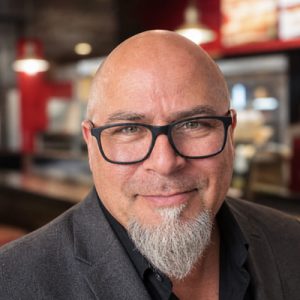
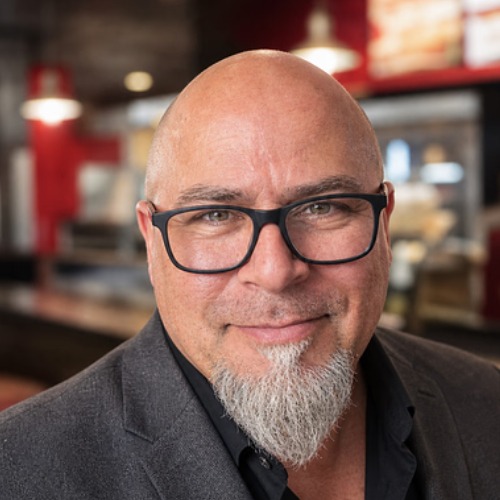
Mackenzie “Mack” Taylor, Brand Leader for MR.SUB and South Street Burger at owner MTY Group, believes the answer is not to modernize for modernization’s sake, but to identify what matters, protect it and change the way the brand delivers it.
“Modernization starts with understanding what should never change,” says Taylor. “MR.SUB has built its reputation on being a trusted, approachable, and community-focused Canadian sandwich brand, and that comes from the fundamentals: quality food, great service, consistency and the relationships our franchisees build within their communities. Where we do need to evolve is in how we deliver that experience.
“Today’s guests have different expectations around convenience, digital ordering, loyalty, menu variety and speed. Our job is to make sure MR.SUB continues to meet those expectations while remaining recognizably MR.SUB. I think of it as building the next chapter rather than rewriting the previous ones. Heritage gives us credibility, but relevance is something we have to earn every day.”
Sustainable franchise growth
That idea of a next chapter runs through Taylor’s approach to growth. Adding locations is not the goal in itself.
“Sustainable growth means that we are focused on the quality of our network as much as the size of it. Opening another location is only successful if we have the right franchise partner, the right market, the right economics and the right support structure behind it.
“Over the next five years, I would like to see MR.SUB continue to expand its presence across Canada, but with a very deliberate approach. Growth creates opportunity, but sustainable growth comes from creating an environment where franchisees can operate profitable, well-run restaurants and see a long-term future with the brand. Ultimately, we don’t want to measure our success simply by saying we opened X number of restaurants. We want to be able to say that we built a stronger network of franchisees and restaurants along the way.”
The pressures are real and immediate for operators. Taylor describes a restaurant environment where costs are rising while customers are becoming more demanding about value, convenience, and consistency.
“The restaurant business has always required operators to manage a lot of moving parts, but the margin for error is certainly tighter today. Labour, food and overhead costs are putting pressure on operators, while guests are simultaneously becoming more value-conscious and expecting greater convenience and consistency. The role of the franchisor in that environment is not to pretend those pressures don’t exist. It’s to work alongside franchisees to help them manage them.
“That starts with operational discipline. We are constantly looking at ways to simplify processes, improve restaurant execution, reduce product and packaging costs where possible, support training and make sure our franchisees have the information they need to make good business decisions. Our franchisees are closest to the guest and the day-to-day operation, so their feedback is incredibly important.”
Technology that works for franchisees
That operator-first approach also underpins the way the firm deploys technology, using a the simple yardstick of whether it makes the business better or merely adds another system for someone to deal with.
“Technology has fundamentally changed the relationship between the brand, our franchisees and our guests. It gives us the ability to understand the guest journey in a way that simply wasn’t possible before. Digital ordering and loyalty, for example, allow us to create a more direct relationship with guests while giving franchisees better visibility into purchasing behaviour and opportunities to drive repeat visits. It also allows us to be more relevant and targeted rather than relying solely on broad, traditional marketing.
“But I think the next opportunity is making sure our technology ecosystem actually makes life easier for our franchisees. Technology should not mean adding another layer of complexity to the restaurant. It should help operators run better restaurants, make better decisions and ultimately serve guests more effectively. We’re looking at technology through that lens – how can we use data, digital tools and automation to improve the guest experience while reducing friction for our operators? That’s where I think the real opportunity lies.
“Working directly with franchise operators teaches you very quickly that decisions made at a head-office table ultimately have to work at the restaurant level. An idea can look fantastic on paper, but if it creates unnecessary complexity for the person running a restaurant at 11:30 on a Friday night, it isn’t a great idea.”
That grounded, real-world, approach to management is exactly what franchise operators want from central office. An HQ that considers the impact of decisions on those operating behind the counter.
“I believe strongly in listening first, understanding the operational reality and then making decisions with that context in mind,” says Taylor.
“Franchisees have made a significant investment in the brand. Their success isn’t separate from the success of MR.SUB – it is the success of MR.SUB. When our franchisees have strong businesses, we have stronger restaurants, better guest experiences and a healthier brand overall.”
Modernizing a Canadian original
The balance between familiarity and relevance becomes particularly important when the customer base includes both people who already know the brand and people who have yet to discover it.
“I think the mistake is assuming that you have to choose between your existing guests and the next generation of customers. Our long-standing guests are incredibly important because they have grown up with MR.SUB. They know what they like and they have a connection to the brand. At the same time, we can’t expect a new generation of guests to engage with us simply because we’ve been around for a long time. The answer is to preserve the things that people love while finding new ways to make the brand relevant. That can mean new products, new ways of ordering, digital engagement, loyalty and a more contemporary approach to how we communicate. There’s something powerful about a brand that can be familiar without feeling old-fashioned.”
Menu innovation sits in the same territory. New products can create excitement, but too much choice can create a different set of problems for operators.
“For us, for innovation to take place, we need to understand several items – looking at trends; does the guest want it? Do product costs make sense? And can the restaurant execute it well? It’s very easy to look at a menu and think that more choice automatically creates more opportunity. In reality, too much complexity can make it harder for a restaurant team to execute consistently and can make the guest experience less intuitive. That’s why we look for innovation that feels relevant to our guests while still making sense operationally.
“Our limited-time offerings are a good example of how we can create that balance,” says Taylor. “They give us an opportunity to introduce something new and generate excitement without fundamentally changing the core menu that our loyal guests know. The goal isn’t innovation for innovation’s sake. It’s purposeful innovation that strengthens the brand and gives our franchisees another reason for guests to come through the door.”
Heritage with adaptability
Taylor’s experience across operations, development, international markets and brand strategy has given him several ways of looking at the same business. But the restaurant remains where those decisions are ultimately tested.
It’s a perspective that also informs how he sees MR.SUB’s Canadian heritage. It is a valuable part of the brand offering, but somewhat insignificant by itself.
“What matters is what we’ve done with that heritage,” he believes. “MR.SUB has something that is difficult to manufacture – decades of brand recognition and relationships with Canadian guests. There are people who have been enjoying MR.SUB for years and have introduced the brand to their families. That creates a level of familiarity and trust that a new brand has to work very hard to build.
“The opportunity now is to combine that heritage with the capabilities of a modern QSR brand – strong digital experiences, relevant menu innovation, loyalty, compelling marketing and a franchise system that supports operators. I think the combination of trust and adaptability is powerful. We don’t need to choose between being a Canadian original and being a modern restaurant brand. We can be both.”
Making the franchise easier to run
The transformation of MR.SUB comes back to its most practical point. For Taylor, the future is ultimately judged by what franchisees experience in their own businesses.
“I would hope they say, ‘MR.SUB made it easier for me to run my business and helped me become a better operator’” he says.
That’s really the objective. Five years from now, I want our franchisees to feel that we have given them better tools, better technology, better data, stronger marketing and more effective operational support. But beyond the tools themselves, I want them to feel that the relationship with the franchisor has evolved.
“They should feel that we’re listening to them, that we’re responsive to what is happening in their restaurants and that we’re making decisions with their long-term success in mind. Because ultimately, the future of MR.SUB isn’t about head office. It’s about the franchisees who operate our restaurants every day and the guests who continue to choose us.”
If the business gets the balance of those two relationships right, the growth will surely follow.
Key Takeaways
- MR.SUB aims to scale sustainably while preserving its core values of quality food and community focus.
- Brand Leader Mackenzie Taylor emphasizes modernization that meets evolving guest expectations without losing brand essence.
- Technology should simplify processes for franchisees, improving operations and guest relations rather than complicating them.
- Innovation in menu offerings needs to balance excitement with operational feasibility to enhance the customer experience.
- The future of MR.SUB lies in strengthening relationships with franchisees and responding to their needs for better support and tools.