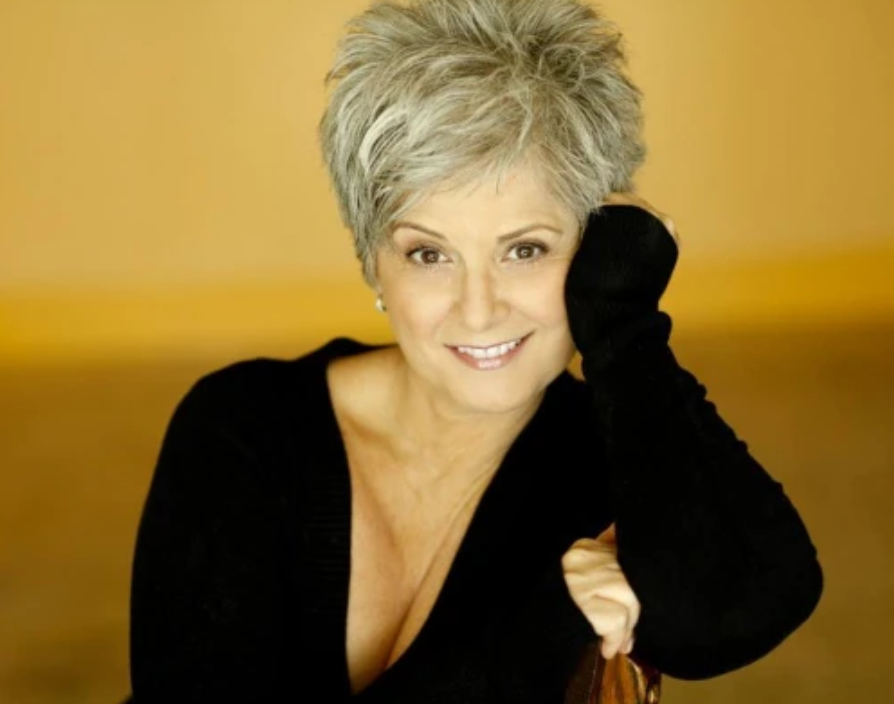
For more than fifty years, Mary Long has been a familiar face in Canadian and US theatre, lending her talents to stage, film, and television.
Now, as principal and sole proprietor of Stagecoach Toronto West, she’s channeling that lifetime of experience into nurturing the next generation of performers and, as she puts it, “the audiences of the future.”
“There comes a time in any performer’s life when gravity and desire are in conflict” she says. “It is then that we decide to reinvent our lives in a manner that will be rewarding and beneficial to the existing conditions. Also I wanted to complete the circle being a child performer to nurturing child performers.”
For Long, running a Stagecoach school isn’t any kind of retirement plan, but more of a reinvention. It’s about transformation, connection, and passing on something deeply personal to her.
A family that grows together
When asked about the key to her school’s long-running success, Long doesn’t hesitate to highlight what she considers the foundation of it all.
“The key word is Family. When a family takes care of its children’s needs then the whole family thrives. Our goal at Stagecoach has been, and continues to be, watering and watching our little seeds grow into fulfilled, happy and useful future citizens; whether they become performers or not. We are all about nurturing the child to prepare them for the eventuality of thriving in a sometimes challenging world through the language of the arts in the forms of singing, acting and dancing.”
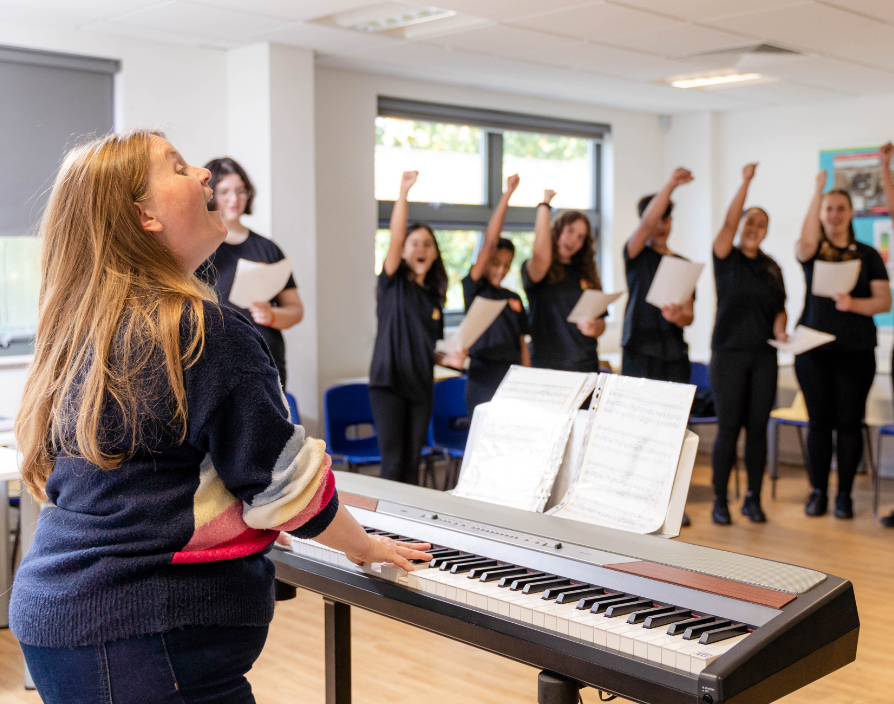
Her approach is holistic, using the performing arts as a way to navigate life’s challenges, not just as a professional skillset. It’s reflected in the environment she’s built at Stagecoach Toronto West, which she describes as part theatre, part family, part life school.
Lessons from the stage
Her fifty-year career has seen her perform across Canada and the US, from Toronto and Montreal to Boston and New York. Those decades on stage have given her a unique perspective on what young people really gain from arts education.
She explains: “My unique experience has drawn me to Stagecoach in order to cultivate the skills required for the stage, film or TV in those individual students who will pursue a career in the arts. And for those who won’t, I feel strongly that the tenets they learn under our tutelage will prepare them for the world. My experience on stage has mostly taught me about empathy and how without it we cannot hope to understand another’s needs. At Stagecoach one of our prime goals is to teach inclusion and empathy.”
For Long, the arts are not just about performance, or even a career path, they’re about humanity. Her belief in empathy as the core of her teaching philosophy is central to everything she does.
Watching confidence bloom
That philosophy has garnered tangible results, and Long describes the transformation she sees in her students with obvious pride and emotion.
“I will cite the many families who have offered their sincere thanks to us for helping their children come out of their relative shells and into a world of confidence and joy. It is our devout wish and commitment to help all those seeking expression and confidence in their young lives.”
Confidence, for Long, is not a by-product of learning to perform; it’s the purpose. Whether her students go on to careers in the arts or not, she sees every breakthrough moment and every shy child finding their voice, as a performance worth celebrating.

A pioneer in Canadian performing arts education
As one of the longest-standing Stagecoach franchisees in Canada, Long has seen the brand evolve significantly over the years—and has played a role in shaping it.
“Well, I see myself as a pioneer who will soon hang up her tap shoes. I have watched as Stagecoach evolved from a British centric vocabulary to a truly Canadian one and that brings me satisfaction and pride. I feel instrumental in having nurtured and influenced some of the existing principals in their paths to running successful franchises. It’s all very emotional and heartwarming.”
Her journey mirrors the evolution of Stagecoach itself – from its British origins to a truly international network of performing arts schools. For Long, that shift toward a Canadian identity isn’t just linguistic, it’s cultural, and deeply personal.
Balancing art and enterprise
Like many creatives who become entrepreneurs, Long understands that running a performing arts school requires talent, artistry and, of course, business acumen. But she approaches that balance with her signature sense of humor.
“When you are a self-employed artist, you must learn (as the Buddhist hot dog vendor knows) that you must ‘make me one with everything’. So we as Franchise Principals are adept at both sides of our nature. The balance gets better and better as we practice it.”
It’s a Zen-like approach to entrepreneurship that emphasizes harmony over hustle. But after decades in the business, on the boards and on the spreadsheet, she’s earned that equilibrium.
Building a team that cares
Of course, no school thrives without great teachers, and Long takes pride in the eight “triple threat” staff members she employs. Each of them bringing their own passion for the arts to the classroom.
“My biggest concern with hiring a great team is that they respect and like children, first and foremost,” she says. “They must be confident in their skillset and able to communicate. Reliability, enthusiasm for the work and a commitment to showing up, in all senses of the word, in class and meetings is tantamount to a good teaching relationship.”
For Long, technical skill is secondary to empathy and reliability. Her hiring philosophy echoes her teaching values of respect, communication, and showing up, fully and authentically.
The moment that made it all worthwhile
Running a performing arts school is personal work, and Long has no shortage of stories that remind her why it matters. But one student, in particular, stands out.
“For many years we have guided a student with a variety of physical challenges. But when I saw him perform in an outside theatre group’s production, and he held the stage as well as any able bodied performer, with all the passion and grace that it requires to attempt, let alone accomplish such a feat…I was in awe of him and proud of our part in helping him achieve his goal.”
It’s a story that perfectly captures her philosophy that the arts can be a means of empowerment, not competition, and a reminder that the stage is a space for everyone.
What it takes to succeed
Asked what advice she’d give to aspiring franchise owners, Long answers with a list that’s as succinct as it is revealing.
“Kindness, Bravery, joy, knowledge of basic Excel!”
Even after decades on stage and in the classroom, Long’s sense of humor and optimism remains undiminished. Her hopes for the future of Stagecoach Canada reflect her lifelong belief in progress, both artistic and human.
“I have always believed in progress. I want to see Stagecoach thrive and give the world people who care for each other, love the arts and support the performing arts especially.”
For Long, progress means more than growth, it means compassion, collaboration, and creativity. Whether she’s teaching a four-year-old their first song or guiding a teenager toward the spotlight, her mission remains the same – to nurture empathy through the arts.
While she jokes about soon “hanging up her tap shoes,” there’s a sense that Mary Long’s work at Stagecoach Toronto West has already created something lasting. In her school, the arts are not simply a profession, they’re a way to understand the world and each other.
She may not have set out to do it from the outset, but it’s clear that what she’s built is much more than a franchise, it’s a legacy. And if you want to create something more than a business that’s a pretty powerful incentive.