
If you’ve spent any time around tutoring franchises, you’ll know that many of them promise quick academic wins in the form of better marks, fewer tears before math tests, possibly a small parade when the report card arrives.
That’s the traditional pitch. Oxford Learning, on the other hand, has spent the past forty years talking about something deeper, stranger-sounding, and much harder to stick on a billboard – cognitive development. It’s less “ace the test tomorrow” and more “learn how to think for life.”
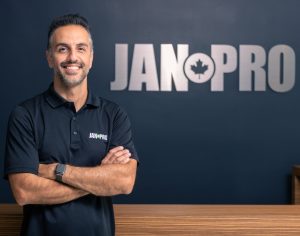
At least, that’s how its president, Joshua Cadoch, sees it.
“The single most important factor is our unwavering commitment to research-based, cognitive development,” he says. “Parents recognize that skills like critical thinking, problem solving, and comprehension are as essential today as they were forty years ago. In fact, as technology changes the way we live and learn, these cognitive skills are becoming even more relevant. They’re the timeless foundation that allows students to adapt, think independently, and thrive in any era. That’s why they remain at the heart of our program.”
This is not the usual language of tutoring. There is no mention of cramming. No spelling drills with cartoon mascots. No promises of guaranteed grade jumps. Instead, Oxford Learning is selling adaptability, independence, and — whisper it — the ability to cope with the real world. In an industry that often sells Band-Aids, it is advertising orthopaedic surgery.

Not your standard tutoring session
One of the biggest points of difference is that Oxford Learning does not define success solely by exam results. Which is almost suspiciously grown-up for the tutoring sector.
“Traditional tutoring tends to be reactive. It fills preexisting gaps and improves grades in a focused area. Our approach, on the other hand, is proactive. We focus on strengthening the underlying cognitive processes that make learning possible. When a student learns how to learn, every subject becomes more accessible. They don’t just perform better on the next test; they develop lifelong tools for understanding, retaining, and applying knowledge. That’s why our programs are so transformational.”
Or, put another way, most tutoring helps kids play the game better while Oxford Learning teaches them how the game works.
This isn’t just philosophical positioning. The model shows up in the day-to-day sessions.
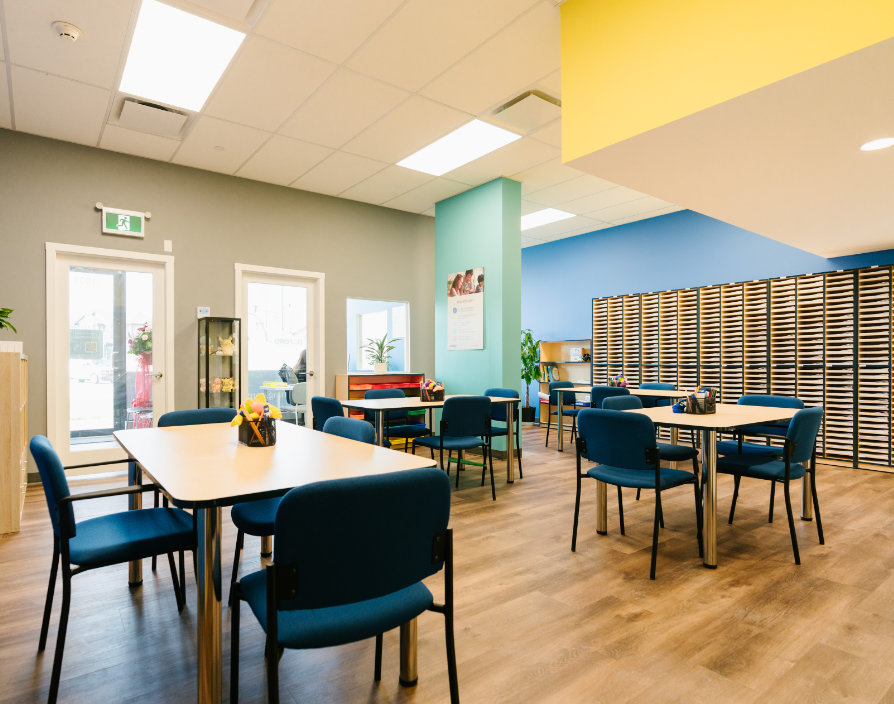
“An Oxford Learning session feels dynamic and interactive. Rather than relying on mechanical learning processes, our teachers guide students through targeted activities that build both subject understanding and thinking ability. We use the results from our Dynamic Assessment to create a learning profile for each student so that we can tailor their in-Centre experience for success. Each session tends to be conversational and exploratory as students engage with our curriculum. Teachers ask questions to facilitate comprehension and draw students deeper into the process of discovery.”
No flashcards. No silent worksheets. No algorithmic learning. And very few passive students.
Scaling thinking, not just teaching
The cognitive learning model works across ages, but it does not look the same at every stage. Toddlers and teenagers have slightly different priorities (though both could occasionally use help focusing).
“The framework is universal, but its application is tailored, says Cadoch. “With preschoolers, we focus on attention, memory, fine motor skills, and language development. These are the skills that form the building blocks of early learning. For older students, we apply those same principles to areas like study strategies, time management, and analytical reasoning. At every level, we teach through a subject, not to a subject. That approach allows our model to scale seamlessly across age groups while preserving our cognitive core.”
The through-line is that the subject matter is just the delivery system. A Trojan horse for thinking skills.
The human element
Before the leadership titles and franchise network responsibilities, Cadoch was a tutor himself.
“It taught me that there is something incredibly meaningful about what we do. There are few moments more rewarding than seeing a child finally understand a concept they once thought was beyond reach. The smile, the pride, the confidence – it’s truly a moment of magic, right down to the level of the new neural pathways that form.
“As a leader, these are the types of experiences that I try to keep with me. They serve as a reminder that behind every operational decision are real people – a student, a parent, a teacher – and that our entire system must be built around maximizing those moments of magic.”
This is where the ideology meets the business model. The learning center is the product, but the moment of internal triumph is the brand.
Consistency as a system
Franchise systems live or die by their ability to deliver the same experience everywhere. A brand promise is only worth something if customers get it reliably. Oxford Learning is well aware of this.
“Consistency comes from two things: a strong system and strong support. Our proprietary curriculum and teaching principles sets the standard, but training, mentorship, and ongoing professional development for our franchisees help reinforce the essential elements of what we do. We don’t simply hand our franchisees a manual and step away. Through hands-on coaching and performance tracking tools, we work with franchisees to ensure parents experience the same high-quality program and results no matter which locations they choose. In fact, our current operational theme, Brilliant with the Basics, is focused on strengthening execution of the core elements that have driven Oxford Learning’s success for more than forty years.”
What parents say
Parents are not always swayed by theory. They are swayed by results, yes, but also behaviour change.
“Parents tell us that the change goes far beyond grades. They see their children becoming more confident, organized, and independent. Homework becomes less of a struggle, and kids start to take ownership for their learning. Many families describe it as a complete shift in mindset. Their children are not just doing better in school – they are thinking differently. That kind of growth endures long after tutoring ends.”
Confidence is not something a worksheet teaches. Cognitive learning, however, can.
The franchise opportunity
“Becoming an Oxford Learning franchisee means joining a community that is fully invested in your success. We provide extensive training on operations and business management before a Centre opens. We assist with location selection, marketing, and launch planning. Once open, franchisees receive ongoing coaching, access to data-driven tools, and a national support network. The partnership is designed to allow franchisees to focus on what matters most which is helping students succeed.”
Not a bad value proposition: change children’s lives, avoid going it alone, hopefully sleep sometimes.
More Tech, more locations, more humans
Cadoch sees the future for Oxford Learning as more outlets, a wider offering of subject matters and, as AI takes hold, an in-demand teaching source for critical thinking skills as an antidote to AI’s emergence, placing humans at the centre of it.
“There’s significant room for growth both across Canada and internationally. We are opening more centres across the country than ever before and plan to reach 200 locations by 2030. At the same time, parents are asking for expanded program options, including areas like financial literacy.
“All that said, I believe our greatest opportunity lies in strengthening the social side of learning. Artificial intelligence may become the greatest equalizer of access to information the world has ever seen, but it may also be the most pernicious educational tool ever developed as it conditions young children to outsource their thinking. In a world that is becoming more technological and less social, Oxford Learning is doubling down on the importance of the student-teacher interaction in the learning process.”
This is the interesting part. While much of the education world is pivoting to AI as fast as possible, Oxford Learning’s cognitive learning model is leaning harder into the human relationship.
The future of learning, it seems, may not be more digital after all – but more thinking.