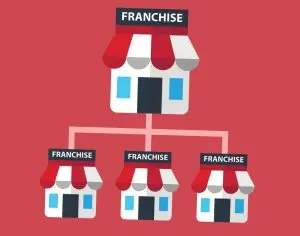

At some point, many successful business owners hear the same question:
“Have you ever thought about franchising this?”
Sometimes it comes from customers who want your concept in their city. Sometimes from investors. Sometimes from competitors who already have multiple locations. And sometimes it comes from your own realization that you cannot personally open every new site yourself.
Franchising is not the right move for every business, but when it is approached strategically and built on a solid operational foundation, it can become a very effective growth model. The decision should never be driven by hype or by the assumption that franchising is an easy way to expand. It requires structure, clarity, and a willingness to support others operating under your brand.
Here are five practical reasons business owners seriously consider franchising, based on what we see every day working with brands preparing for expansion.
Expansion without carrying all the capital yourself
Opening company-owned locations requires significant capital, management bandwidth, and ongoing oversight. That approach works well for some businesses, but it naturally limits how quickly expansion can happen.
Franchising changes that equation. Franchise partners invest in their own locations while operating under an established brand and system. This allows growth to happen in multiple markets simultaneously without the original owner shouldering every financial and operational responsibility.
That does not mean less responsibility overall. It simply shifts the focus toward building strong systems, training programs, and support infrastructure rather than directly managing every site.
Stronger brand presence through market density
A single successful location builds reputation locally. Multiple locations build credibility regionally or nationally.
When a brand appears consistently across different markets, it signals stability and professionalism. Customers begin to recognize the name, suppliers take the brand more seriously, and landlords often view established franchise systems as lower-risk tenants.
This kind of visibility rarely happens organically at scale without some form of structured expansion. Franchising provides a framework for achieving that density in a controlled way.
Operational discipline that improves the core business
One of the less discussed benefits of franchising is what it forces owners to clarify internally.
To franchise responsibly, you must document how the business operates. That includes training procedures, supplier relationships, quality control standards, financial benchmarks, customer experience expectations, and operational workflows.
Many owners discover gaps during this process. Fixing those gaps often improves the original flagship location before any franchise unit even opens. In other words, preparing to franchise can strengthen the business regardless of whether expansion happens immediately.
Increased long-term business value
Businesses that operate as structured franchise systems often carry higher valuations than single independent operations, particularly when they demonstrate consistent unit economics and strong franchisee support.
The reason is simple. Buyers and investors value predictability. A proven model that can be replicated across multiple locations presents a clearer growth trajectory than a standalone operation dependent on one owner.
Even owners who do not plan to sell soon sometimes pursue franchising as part of a longer-term exit strategy. A scalable system creates more options later.
Scalability that is not dependent solely on the founder
Many successful independent businesses are deeply tied to their founders. Their personality, relationships, and day-to-day involvement drive results. That works until the owner wants to step back, expand, or focus on other ventures.
Franchising, when structured properly, allows growth beyond the founder’s physical presence. Systems, training, and brand standards become the backbone instead of individual oversight.
This transition requires careful planning. If the business cannot operate consistently without the founder, franchising will expose that weakness quickly. Addressing it early is essential.
A final thought: franchising is a structure, not a shortcut
Franchising is sometimes presented as a fast path to growth. In reality, it is a disciplined framework that demands operational clarity, financial transparency, and ongoing franchisee support.
The brands that succeed in franchising are usually those that treat it as a long-term partnership model rather than simply a revenue stream. They invest in training, communication, site selection guidance, and continuous operational improvement.
If you are considering franchising your business, the most productive first step is an honest operational assessment. Look at whether the model is repeatable, whether margins support franchisees as well as the brand, and whether your systems can be taught clearly.
When those fundamentals are in place, franchising can be a powerful way to grow a business while maintaining its identity and standards.
And when they are not, the process of preparing often strengthens the business anyway.