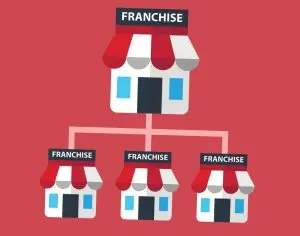

… which serves as a potent reminder that the legal structure of franchising will not automatically insulate them from being declared a single employer alongside their franchisees for labour relations purposes. The ruling affirms that in the eyes of a labour relations board, a franchisor’s substantial operational control, combined with a motive to avoid union obligations, can pierce the corporate veil between the two entities.
The delicate balance between a franchisor’s need to protect brand standards and a franchisee’s need for operational independence is the cornerstone of the franchise relationship. However, when labour disputes arise, the line between these two separate businesses can blur, leading to a “common employer” declaration. This outcome forces the franchisor to inherit the labour obligations including collective agreements of its franchisees. In 1315949 B.C. Ltd. v. British Columbia (Labour Relations Board), 2025 BCSC 1483, the B.C. Supreme Court affirmed the labour relations board’s use of its statutory power under section 38 of the Labour Relations Code to declare the franchisor and its franchisees a single employer for collective bargaining purposes.
The case centered on Sobeys Capital Incorporated (“Sobeys”) and several of its franchisees who operated FreshCo grocery stores. Sobeys initiated a corporate strategy to close unionized Safeway stores and reopen them as non-unionized FreshCo franchised locations. Crucially, a prior arbitration award had established a single collective agreement covering all of Sobeys’ banners, including its Safeway stores. The union representing the employees applied to the B.C. Labour Relations Board (BCLRB), seeking a declaration that Sobeys and its franchisees were a common employer under section 38 of the B.C. Labour Relations Code.
The BCLRB’s analysis focused on two main elements. First, the board found that Sobeys exercised “substantial control” over the franchisees’ operations through their agreements. The board concluded that the franchising model had not effectively shifted the seat of real economic control. Furthermore, Sobeys specifically argued that the declaration was flawed because there was no evidence that the franchisees exerted control between each other, an argument the court ultimately rejected.
Second, and perhaps more importantly, the BCLRB found a clear labour relations purpose for the declaration, i.e. to preserve the existing, single bargaining unit and prevent the erosion of union rights caused by Sobeys’ restructuring plan. The B.C. Supreme Court upheld this finding, confirming that the BCLRB was reasonable in its decision to treat the entities as one employer to protect the established labour status quo. The court emphasized that the franchisor’s substantial control over the franchisees was sufficient; the board did not need to find that the franchisees controlled each other.
While this is a British Columbia case, the principle directly applies to franchisors governed by the Ontario Labour Relations Act, 1995, specifically under section 1(4). The Ontario Labour Relations Board (OLRB) uses a similar test, examining whether related activities are under “common control or direction” and if a labour relations purpose is served.
For franchisors operating in Ontario and elsewhere in Canada, the key preventative measure is the decentralization of control, particularly over aspects related to human resources. Franchisors must ensure their agreements and operating manuals do not dictate or heavily influence key employment decisions.
This means allowing franchisees full autonomy in areas like setting wage rates and employee benefits, making decisions regarding hiring, firing, and discipline, and developing their own HR policies that comply with the Employment Standards Act, 2000.
If the franchisor’s controls extend beyond what is strictly necessary to protect the brand’s intellectual property and into the day-to-day management of the workforce, the risk of a common employer finding is significantly elevated.
The B.C. decision is a clear signal that attempts to use franchising as a corporate restructuring mechanism to shed collective bargaining obligations will be met with scrutiny by labour tribunals, who are equipped and willing to look past the corporate structure to achieve a fair labour outcome. For any large corporate organization that has an existing collective agreement covering a broad area, “it’s going to be almost impossible for them to get out of that through corporate manoeuvring.”
Conclusion
The Sobeys decision underscores a fundamental tension in franchise law that demands proactive legal review. Franchisors should work with legal counsel to audit their current agreements and operational practices. The goal is to tightly draft controls to protect the brand while simultaneously maximizing the franchisee’s independence as the sole employer of record.
Failing to create this clear separation, especially when transitioning from corporate to franchised stores, leaves the franchisor vulnerable to inheriting the labour obligations of the entire franchise system. The law is clear that the board’s power is used to ensure an employer cannot restructure to “get out of being unionized or get out of the collective agreement.”
Always consult a lawyer and accountant familiar with Ontario franchise law before finalizing any transaction. This article is for informational purposes only and does not constitute legal advice.
[1]1315949 B.C. Ltd. v. British Columbia (Labour Relations Board), 2025 BCSC 1483 at para 36, citing An order of the Labour Relations Board , dated June 26, 2024 (Sobeys Capital Incorporated , 2024 BCLRB 89, 2023-001018, 2023-001038, 2023-001041, 2023-001043, and 2023-001045) at para 477.
2 Ibid at para 36 at para 485 of the earlier decision
3Isaac Phan Nay, “How B.C. unions won more clout in dealing with franchises,” Victoria Times Colonist (September 10, 2025), online: https://www.timescolonist.com/economy-law-politics/how-bc-unions-won-more-clout-in-dealing-with-franchises-11193495.
4 Ibid